Last updated November 21, 2026
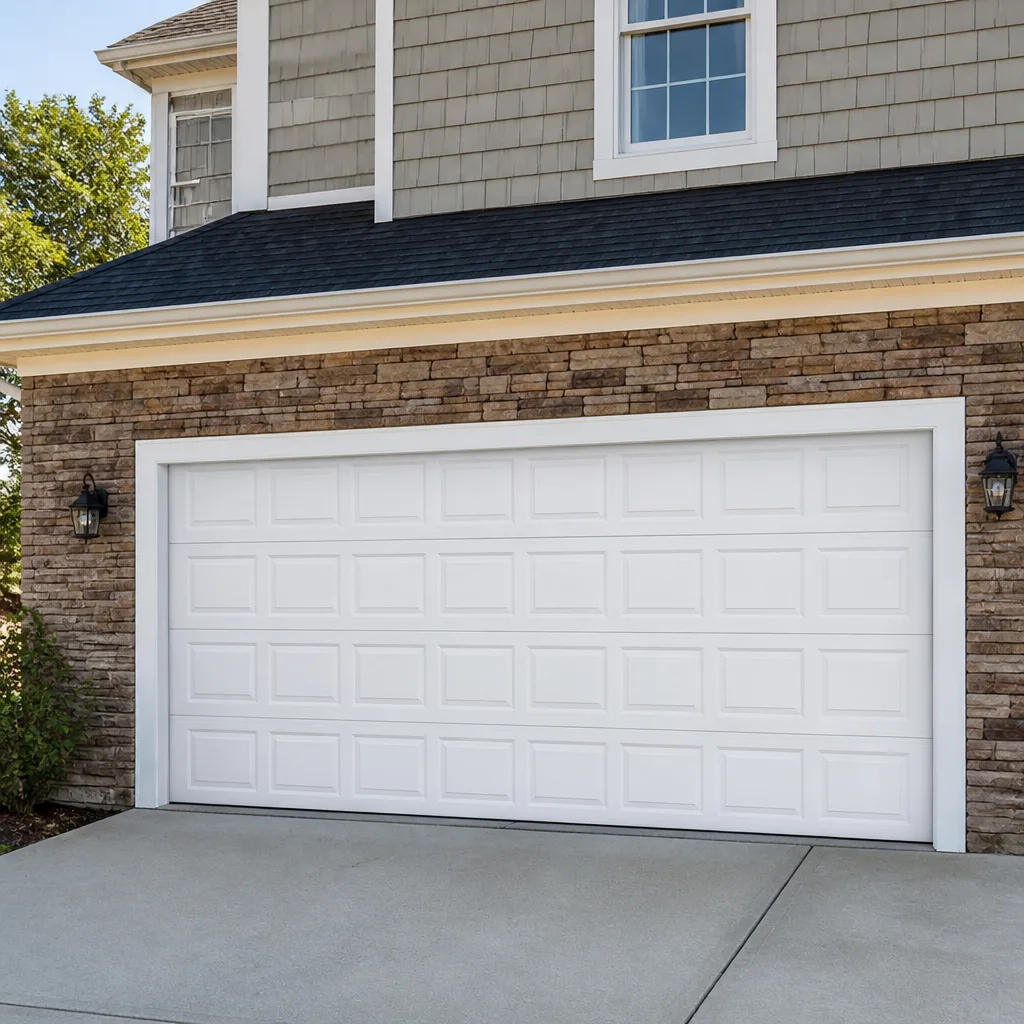 Raised-panel steel
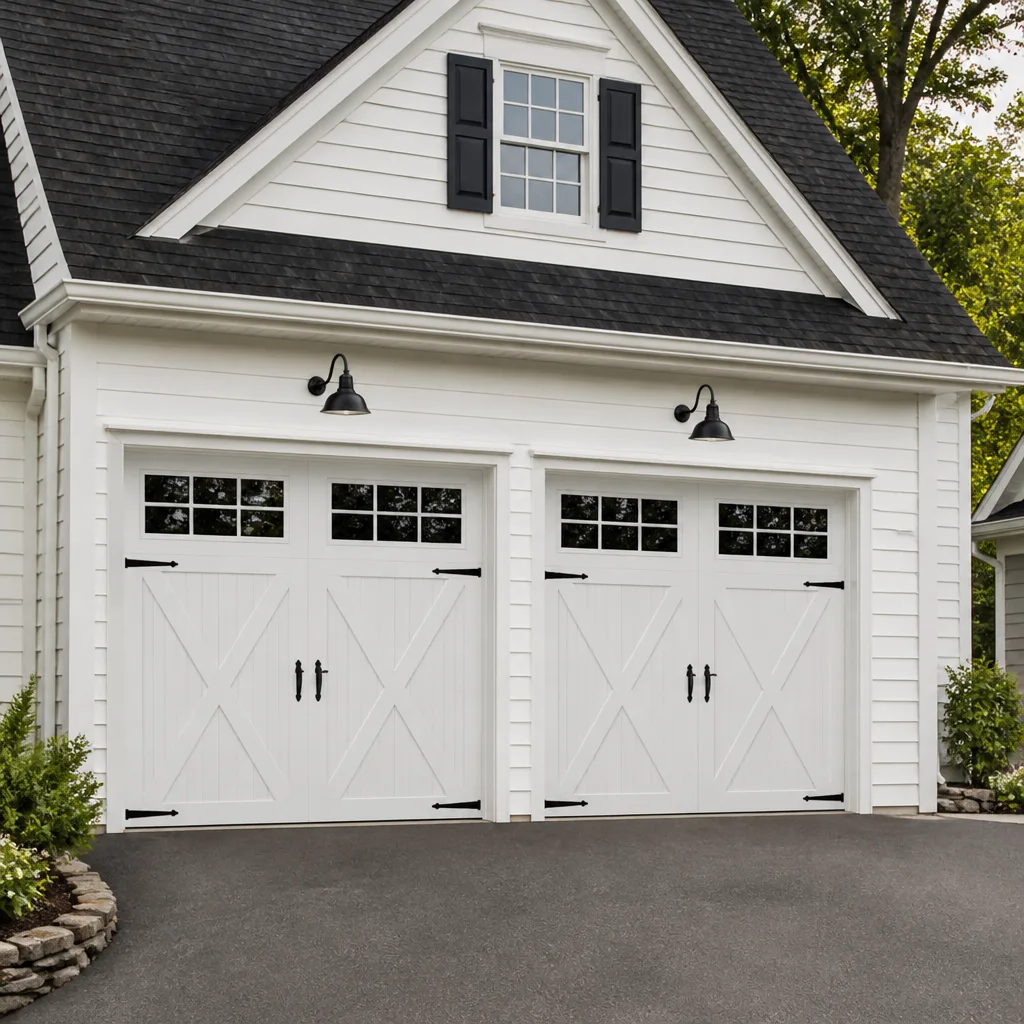 Carriage house
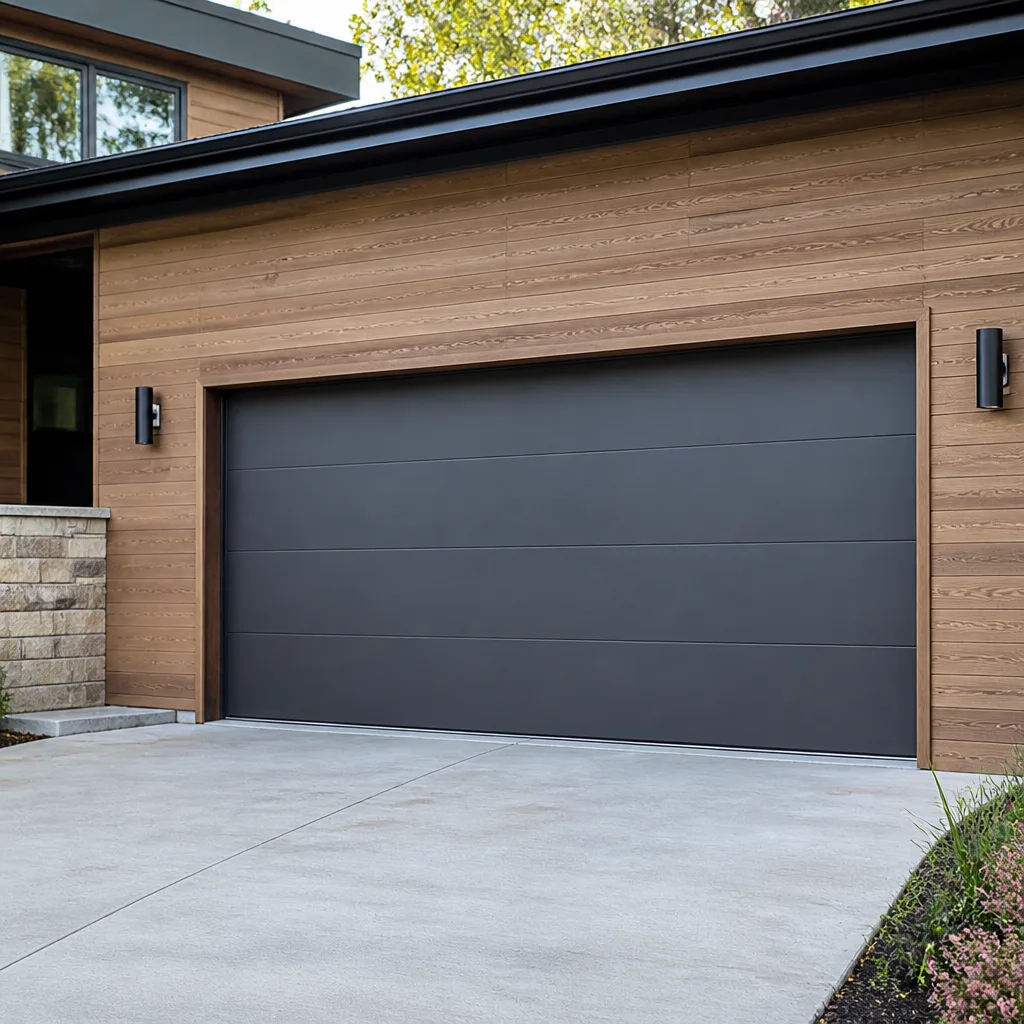 Modern flush
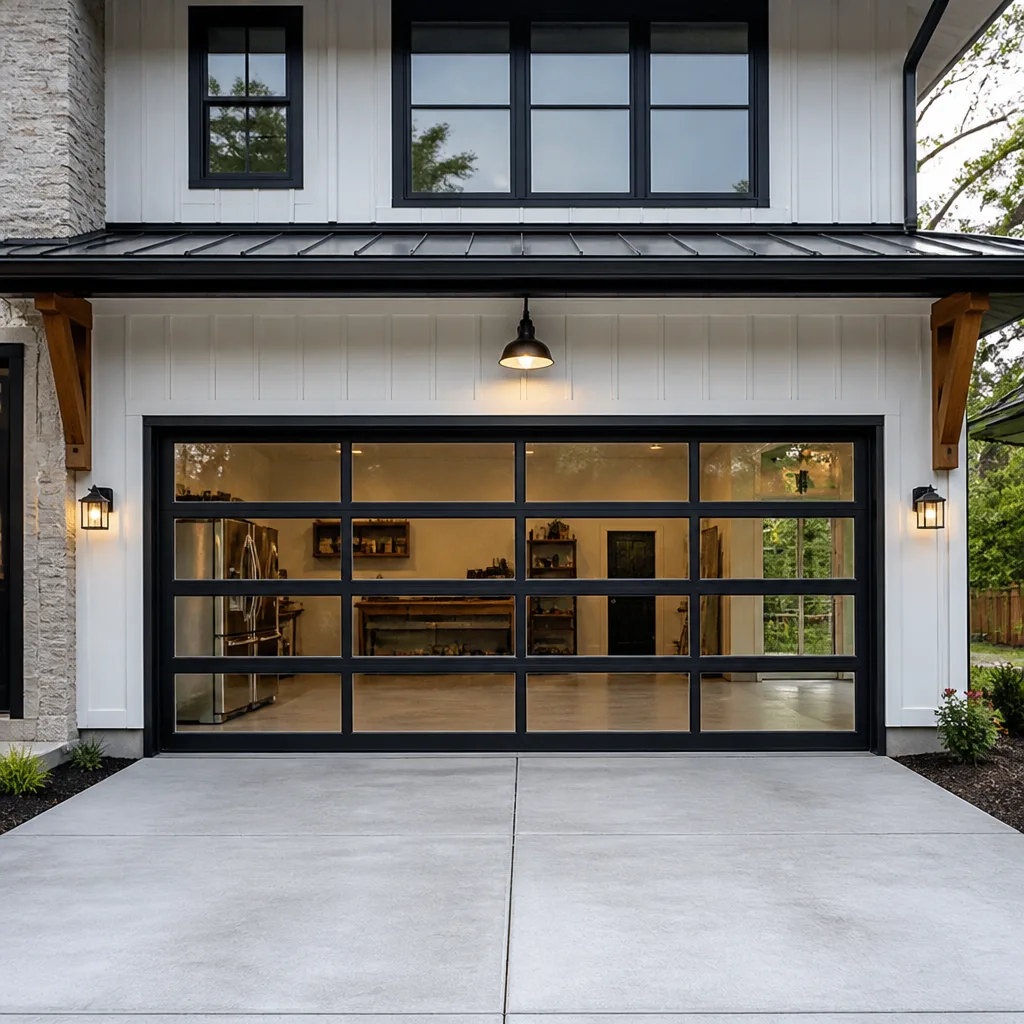 Full-view glass
 LiftMaster openers
 Chamberlain openers
Full 25-point door and opener safety check with every visit - springs, cables, rollers, tracks, and your LiftMaster or Chamberlain opener included
You get a price before we start. It does not change when the pro arrives.
Get your free estimateGarage Door Warning Signs: A Hialeah Homeowner’s Reference Guide
The grinding sound most people write off as “normal” is actually a spring or roller telling you exactly how close it is to failure. That’s the part most homeowners miss. A garage door rarely quits without warning; it complains first, through noise, hesitation, and small visual clues, for weeks before it finally stops. In Hialeah, where humidity and heavy summer rain push on the hardware all year, those clues show up in specific places. This guide teaches you how to read them: what each sound points to, which visual signs matter here, how movement patterns reveal spring and cable problems, and when the door in your Hialeah home needs a same-day call versus a scheduled visit.
Quick Answer
Garage door warning signs in Hialeah usually show up as four things: unusual noises (grinding, popping, squealing, rattling), visual problems (rust streaks, white powder around anchors, a swollen bottom seal), uneven or hesitant movement, and odd opener behavior like reversing or straining. A loud pop followed by a door that won’t lift, a door hanging crooked, or a snapped cable are same-day emergencies. Most other signs can wait for a scheduled appointment.
Styles & brands we work with
- Raised-panel steel
- Carriage house
- Modern flush
- Full-view glass
- LiftMaster openers
- Chamberlain openers
Table of Contents
- The Sound Diagnostic Index: What Each Noise Tells You
- Visual Warning Signs That Show Up in South Florida
- Reading Your Door’s Movement: Uneven Travel and Hesitation
- When Opener Behavior Is Actually a Door Problem
- Same-Day Attention vs. a Scheduled Appointment: A Risk Framework
- What Hialeah Humidity and Heat Do to Your Hardware
- Your Monthly Walk-Around: A Seven-Step Check
- Why Brand Knowledge Changes the Diagnosis
The Sound Diagnostic Index: What Each Noise Tells You
Sound is the most reliable early warning a garage door gives you, and the most ignored. The key is that different noises point to different components. A grinding door isn’t the same problem as a squealing door, and treating them as “something’s wrong” wastes the information the door is handing you. Here’s how we translate the sounds our technicians hear on calls across Hialeah.
- Grinding: Metal-on-metal scraping usually means worn rollers, a dry or failing bearing, or a torsion spring that’s losing tension. Grinding tends to get louder over weeks, and it rarely fixes itself. It’s one of the clearest signals to schedule service soon.
- Popping or a single loud bang: A sharp pop followed by a door that suddenly feels heavy or won’t lift usually means a torsion spring has broken. This is a same-day, stop-using-the-door situation. Torsion springs are under extreme tension and should never be touched by anyone without the right training and tools.
- Squealing: High-pitched squealing often comes from rollers or hinges that have lost lubrication and are running dry. Sometimes it’s just maintenance. Sometimes a dry roller is a worn roller about to seize.
- Rattling: Loose hardware. Bolts, hinges, and the tracks themselves can work loose over time. Rattling is usually the least urgent sound, but a loose track can let the door drift off its path.
- Clicking at the opener: A relay clicking without the door moving points toward the opener or its logic board, not the door itself. That’s a different diagnosis than a mechanical problem.
Notice how each of these points to a different part. That’s the value of listening closely. When you call us, telling us “it grinds on the way up” versus “it squeals the whole way” gets a technician who already knows which tools and parts to bring. We work on the common residential brands, so when you mention your LiftMaster or Genie opener, the technician arrives fluent in that platform rather than spending the first call learning the system. You’ll find the full range of what we handle on our Hialeah Garage Door Repair Pros page.
One safety note worth repeating: if you hear a loud pop and the door won’t open, stop. Don’t try to force it, and don’t reach up to inspect the springs or cables. Those parts store enormous force, and a damaged spring or cable can injure even a careful homeowner. Leave the diagnosis of spring and cable problems to trained technicians.
Visual Warning Signs That Show Up in South Florida
In Hialeah, the visual clues are specific. The warm, humid climate doesn’t just make the door a little sticky in summer; it ages hardware in ways homeowners don’t always connect to the door. When you know what to look for, you can spot a problem while it’s still cheap to fix. Here are the visual signs we see most in Hialeah homes, and what each one means.
Rust streaks from cable anchors and tracks
Look where the cables attach and run along the tracks. Rust-brown streaks running down from an anchor or along a track mean moisture has been sitting on steel. In our humidity, that’s common. Rust on a cable or anchor point signals a cable that’s weakening, and a cable failure can let a door drop suddenly. Streaking is your cue to have the cables and anchors inspected rather than waiting for the cable to fail.
White powder around concrete anchor points
That chalky white residue around the base of the door frame, the concrete anchors, and the floor where the door seals is efflorescence: mineral salts drawn out of concrete by moisture. It’s a sign that the area is staying damp. A damp anchor point is a corroding anchor point. It doesn’t mean the anchor is failing today, but it’s a reason to check the hardware around the frame at least a couple of times a year.
A swollen or drooping bottom seal
The rubber bottom seal absorbs moisture over time. When it swells, sags, or looks ragged, it stops sealing well, which lets water and pests in and stresses the door’s balance. A sagging seal is easy to overlook because it doesn’t make noise, but it’s one of the clearest humidity-related wear signs in Hialeah.
Warped or cracked panels
Heat and moisture can warp wood-look panels and stress joints over the years. If you notice cracks, separation at the panels, or a door that looks slightly bowed when you view it from the side, have it looked at. Warped panels can throw off the door’s balance and put extra strain on the springs.
Pair the visual check with the sound check. A door that rusts quietly on a Hialeah street for a season can start grinding the next. If you catch the rust before the grind, you’ve saved yourself an emergency call. For problems that need real repair, our garage door repair team handles the hardware from the rollers up.
Reading Your Door’s Movement: Uneven Travel and Hesitation
Stand back and watch the door travel up and down. Movement tells a story that a still photo never will. A healthy door glides smoothly at a steady speed. A door with a problem moves in ways that hint at spring balance and cable condition before anything breaks. In our experience, homeowners watch the door open most every day and still don’t notice the early drift, because it happens slowly.
Uneven travel: the door rises or drops faster on one side
If one corner lags behind the other as the door opens, or the door closes faster on one side, the two sides aren’t lifting together. Uneven travel points to a spring that’s out of balance or a cable that’s stretched or slipped. This is a balance and cable issue, and it tends to worsen. Continuing to run the door puts uneven load on the tracks and the opener. An uneven door is a scheduled-service sign, not a same-day emergency, but don’t ignore it for long.
Hesitation on the way up or down
A door that pauses mid-travel, seems to “think,” then continues is telling you it’s fighting resistance. That resistance can come from dry rollers, a misaligned track, or a spring that’s lost tension. Hesitation on the way up can also mean the opener is working harder than it should because the door is heavier than it used to be.
Tracks that look bent or pulled away from the frame
Look at the vertical tracks on each side of the door. They should be straight and evenly spaced. If a section looks bent, or if the track has separated from the wall, the door can slip off its path. That’s a problem to address before the door derails, which can damage panels and the opener.
The door touches the ground unevenly
When the door finishes closing, check the gap along the floor. A consistent gap on one end means the door isn’t level at rest. Often that’s a cable or spring balance issue rather than a seal issue.
- Watch the full cycle, up and down, from a few feet back.
- Note whether one side moves ahead of the other.
- Listen for a pause or strain during travel.
- Check whether the door lands evenly at the floor.
- Look down the tracks for bends or gaps.
If movement looks off, don’t adjust the springs or cables yourself. That’s dangerous work, and the right fix depends on whether the balance problem comes from a spring, a cable, or a track that’s shifted. Our technicians read the movement and decide the fix. Spring balance is a specialty we take seriously, and you can read more on our garage door spring repair page.
When Opener Behavior Is Actually a Door Problem
When the door reverses unexpectedly or strains to lift, most homeowners blame the opener. Often they’re wrong. The opener gets the blame because it’s the part that’s visible and the part that “does the work.” But an opener is only as good as the door it’s pushing. If the door is heavy, off-balance, or binding in the tracks, a perfectly healthy opener will strain, reverse, or refuse. That’s one of the most common misreadings we see on Hialeah calls.
Here’s how the door and opener signal differently:
- The door reverses on its own: If the door drops a short way and reverses, the opener’s safety sensor may be sensing resistance. That resistance is often the door binding, not the opener failing. On many LiftMaster and Chamberlain systems, a misaligned safety sensor or a door that’s too heavy to close smoothly will trigger the reverse.
- The opener strains or sounds labored: A door that’s gained weight (worn rollers, a warped panel, a spring that’s lost tension) makes the opener work harder. If the door felt heavy when you lifted it by hand, or if it barely holds itself up partway, the problem is the door, not the motor.
- The opener runs but the door doesn’t move: That’s usually a stripped gear, a broken chain or belt, or a disconnect that’s been pulled. This is a genuine opener problem.
- Remote or WiFi quirks: A Genie or Chamberlain opener that won’t respond to a remote but works from the wall switch points to connectivity or remote issues, not a door problem.
The value of a real diagnosis here is that it sends the technician to the right place. A repair-first shop checks the door’s balance and travel before replacing an opener that may have nothing wrong with it. When the opener really is the problem, we work across the major smart and legacy platforms, so the fix is matched to the system rather than a guess. You can learn more about that side of the work on our garage door opener repair page.
One safety note: if you ever need to test the door by hand, do it only with the opener disconnected and only from a position where you’re not reaching into the path of the door or toward the springs. If the door feels dangerously heavy or drops suddenly, stop and call a professional. A door that won’t hold its weight is a sign of spring or cable trouble, and that’s not a DIY fix.
Same-Day Attention vs. a Scheduled Appointment: A Risk Framework
Not every warning sign is an emergency, and treating them all the same wastes money and time. We like to give homeowners a simple risk framework: sort the sign into one of three tiers based on what could go wrong if you wait. The tiers help you decide whether to call today or book a normal appointment. They also help you describe the problem clearly when you call.
Tier 1: Same-day attention
These signs suggest something could fail dangerously or the home is left unsecured:
- A loud pop, followed by a door that won’t lift or feels extremely heavy (likely a broken spring).
- A door hanging crooked or off its tracks.
- A cable that’s visibly snapped or hanging loose.
- The door stuck open, leaving the home unsecured, or stuck closed with a vehicle trapped inside.
- The door reversing or failing to close completely when you need to secure the house.
These are the calls where speed matters. A door stuck open in Hialeah during a storm is a security problem as much as a mechanical one, and a broken spring can make the door unsafe to raise. Getting it from stuck to secure is the priority.
Tier 2: Schedule within a few days
These signs point to wear that’s getting worse but isn’t an immediate hazard:
- Grinding or squealing that’s developed over days or weeks.
- Uneven travel or a door that closes faster on one side.
- Hesitation mid-travel.
- Rust streaks on cables or anchors, or visible wear at the anchor points.
- An opener that strains or the door feels heavy when lifted by hand.
Tier 3: Watch at the next check
These are maintenance cues, not repairs:
- Occasional rattling from loose bolts.
- A slightly worn bottom seal that still seals.
- Faint squeaks that show up after long dry spells.
Even the tier 3 signs are worth fixing before they move up a tier, because in our climate they almost always do. A quick call gets the door checked and the small problem handled before it becomes a big one.
What Hialeah Humidity and Heat Do to Your Hardware
Hialeah’s warm, humid climate is hard on garage door hardware in quiet ways. You won’t see dramatic weather damage; you’ll see slow wear that’s easy to miss. Understanding the pattern helps you know where to look and when.
Moisture is the main story. The humidity pushes water into every joint, anchor, and seal. Steel parts rust, seals swell, and concrete anchor points draw out white mineral powder. That’s why rust streaks and efflorescence are such reliable local signs. The rain that comes through in the warm months adds to it by getting into tracks and pooling near the floor.
Heat is the second story. It warps panels, softens seals, and pushes the door’s balance around as materials expand and contract. A door that felt fine in the cooler months can feel heavy or uneven once the heat sets in. That’s also when bearings and rollers dry out and start to squeal.
Here’s where to look for Hialeah-specific wear:
- Along the bottom of the door, where water collects and the seal sits.
- At the cable anchor plates and the track bolts near the floor.
- Around the concrete frame anchors, where efflorescence shows up.
- At the spring assembly, where tension and corrosion overlap.
None of this means every door in Hialeah is failing. It means the climate makes a periodic look worth your time. A five-minute check that catches a rust streak early is cheaper than a spring replacement. If you’d rather have a technician check the wear points for you, a free estimate is a good starting point. Call (877) 492-2079 and we’ll take a look.
Your Monthly Walk-Around: A Seven-Step Check
The best time to catch a warning sign is before it becomes a repair. This seven-step check takes a few minutes and gives you a clear picture of your door’s condition. Do it once a month, on a calm day, with the door closed to start. It’s a look-and-listen check, not a hands-on adjustment; leave the springs and cables alone.
- Look at the door panels. Check for cracks, warping, and separation between sections. View from the side to spot a bow.
- Check the bottom seal. Look for swelling, sagging, or tears along the bottom edge.
- Inspect the tracks. Run your eyes down each side track for bends, and check that it’s attached to the wall.
- Spot the rust and powder. Look for rust streaks from cable anchors and white powder around concrete anchors.
- Run the door and listen. Note grinding, squealing, popping, or rattling and which part of the cycle it happens in.
- Watch the movement. Check for uneven travel, hesitation, and whether the door lands evenly at the floor.
- Test the opener. Press the remote and note any strain, reversing, or failure to respond. Check that the safety sensors are aligned and the door reverses if something blocks the path.
Write down what you find and when. If a sound or movement pattern appears in one check and is still there in the next, that’s your signal to schedule service. A problem that shows up once and disappears is usually not urgent; a problem that sticks around is telling you it’s real.
Why Brand Knowledge Changes the Diagnosis
Garage door systems have brand-specific quirks, and knowing them changes how fast a problem gets solved. A technician who already knows your system doesn’t spend the first part of the appointment figuring out what’s in front of them. They listen to the symptom, match it to the platform, and get to the fix. That’s the difference between a diagnosis and a guess.
Our technicians work across the common residential brands, and we bring that knowledge to each call:
- Clopay doors: Common in Hialeah homes, with panel and balance issues that read differently than other makes. Knowing the door’s construction tells us how much stress a panel can take and where the balance points usually fail.
- LiftMaster and Chamberlain openers: Both share some underlying electronics, which is why safety-reverse and sensor problems often follow similar patterns. A technician who knows the platform can rule out the opener quickly when the real issue is the door.
- Genie openers: Different logic and drive systems, with their own quirks around remotes, travel limits, and force settings.
- Raynor and Wayne Dalton: Common residential systems with their own track and spring layouts.
We also cover Amarr and Craftsman, so whatever’s on your door, the diagnosis doesn’t stall. The point isn’t to push a brand. It’s that a repair-first shop wants to fix what’s there, not replace it. If your door’s issue turns out to be the opener, we handle that too. You’ll find a full picture of what we service on our opener page. If the door itself is failing and a new one makes sense, the same team handles installation.
Here’s the practical takeaway: when you call, tell us the brand if you know it. That one detail helps us send the right technician and cuts down on the back-and-forth. If you don’t know the brand, that’s fine; we’ll find it.
Common Mistakes to Avoid
- Ignoring a new sound because the door still opens. A door that grinds but still lifts is telling you something is worn and getting worse. Waiting until it stops can turn a small repair into a spring replacement.
- Forcing a heavy door up by hand. A door that feels unusually heavy is usually telling you a spring or cable has a problem. Forcing it can damage the opener and put you in the path of a part under tension.
- Assuming a reversing door means a bad opener. In Hialeah’s humid climate, binding tracks and swollen seals are common, and either can make a healthy opener reverse. The door usually needs the diagnosis first.
- Letting rust and white powder go unchecked. Streaking on cables and efflorescence around anchors are quiet signs of moisture damage. Both are easy to overlook and worth a look at least twice a year.
- Adjusting the springs or cables yourself. These parts store dangerous force, and a slip can cause serious injury. Spring and cable work belongs to trained technicians, not a weekend project.
- Putting off a door that closes unevenly. Uneven travel stresses the tracks and the opener, and it usually gets worse. Book it before the door derails.
- Blaming the door for what the opener is doing, and vice versa. The two systems signal differently. A quick check of whether the door feels heavy by hand separates a door problem from an opener problem.
See the difference
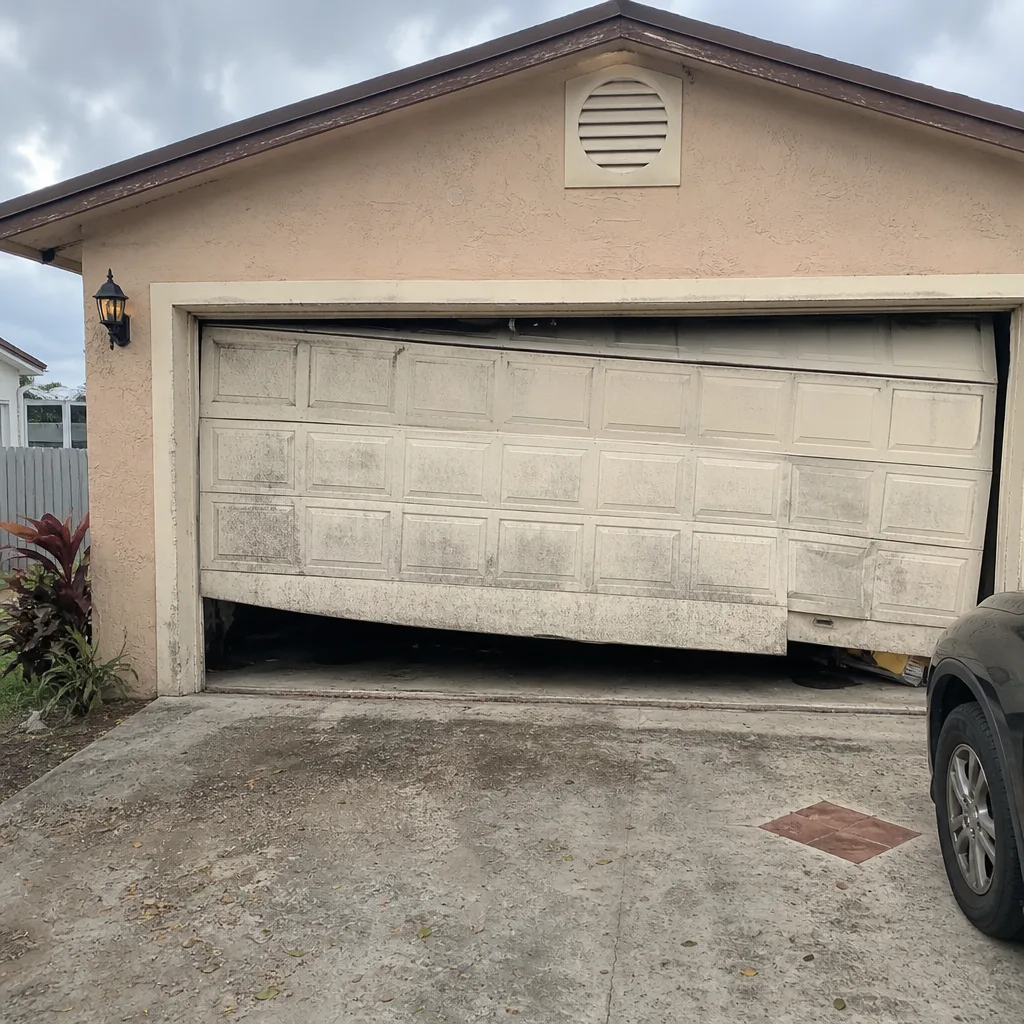 Before
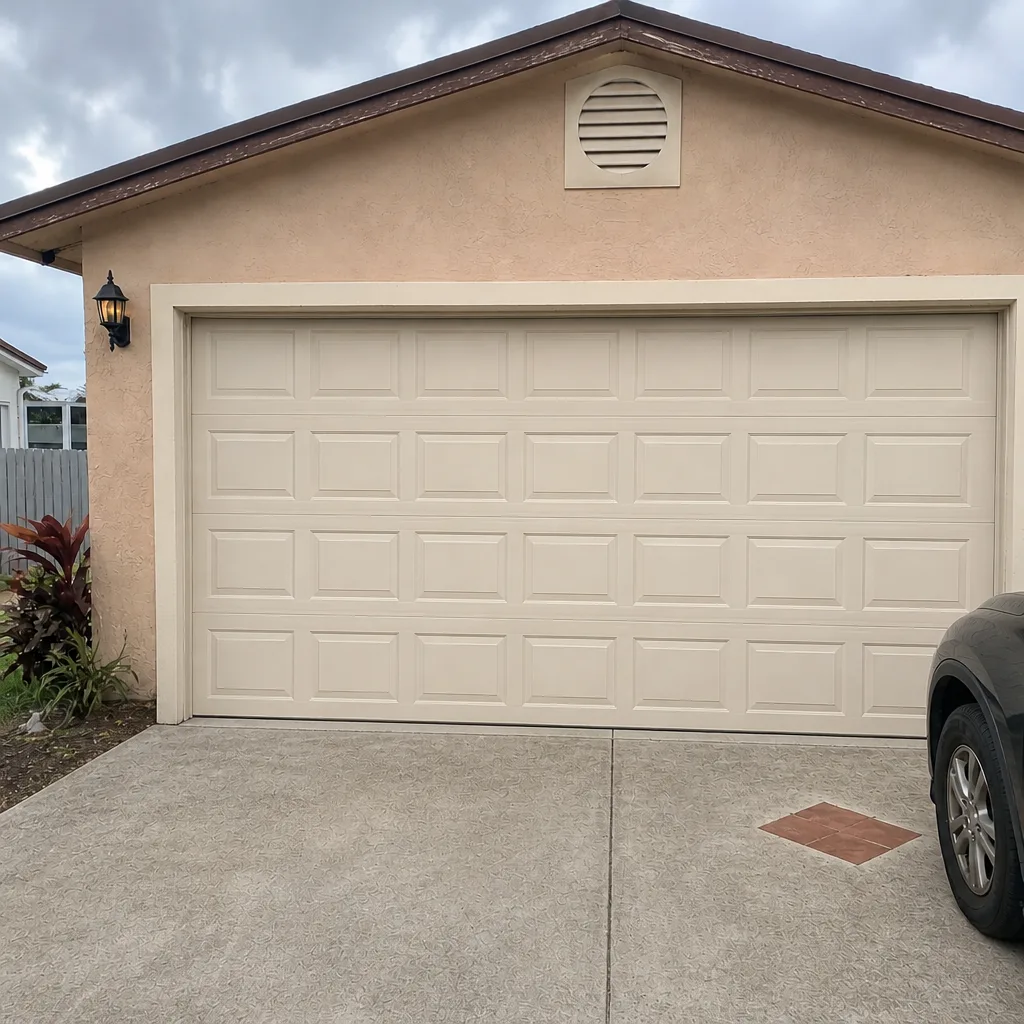 After
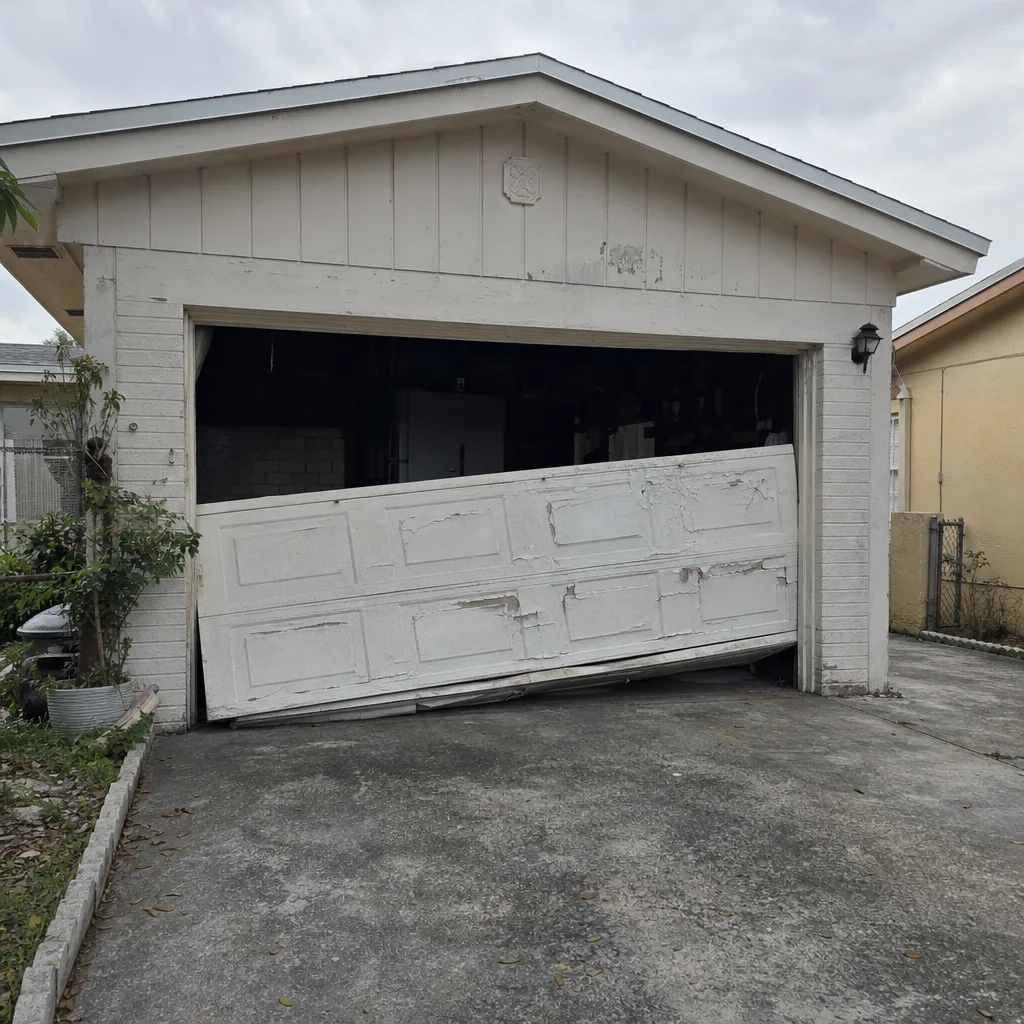 Before
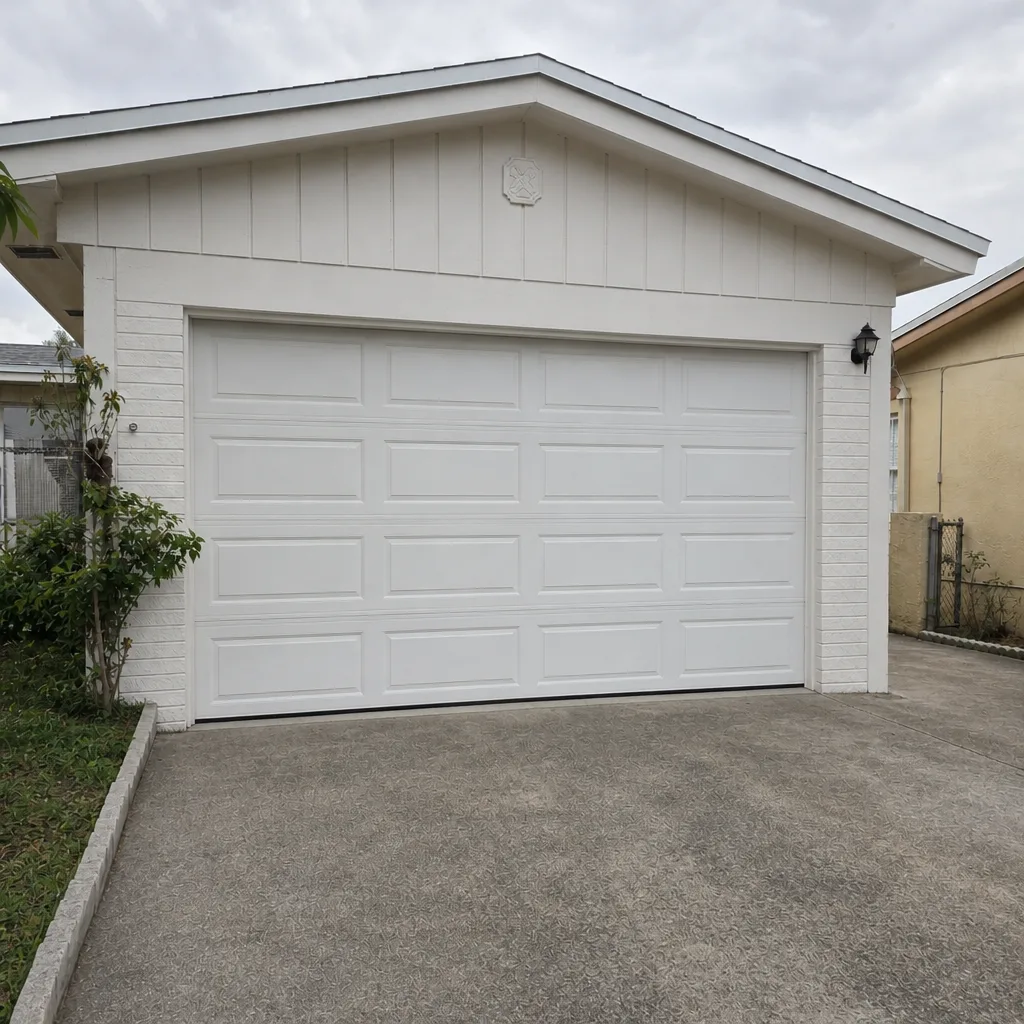 After
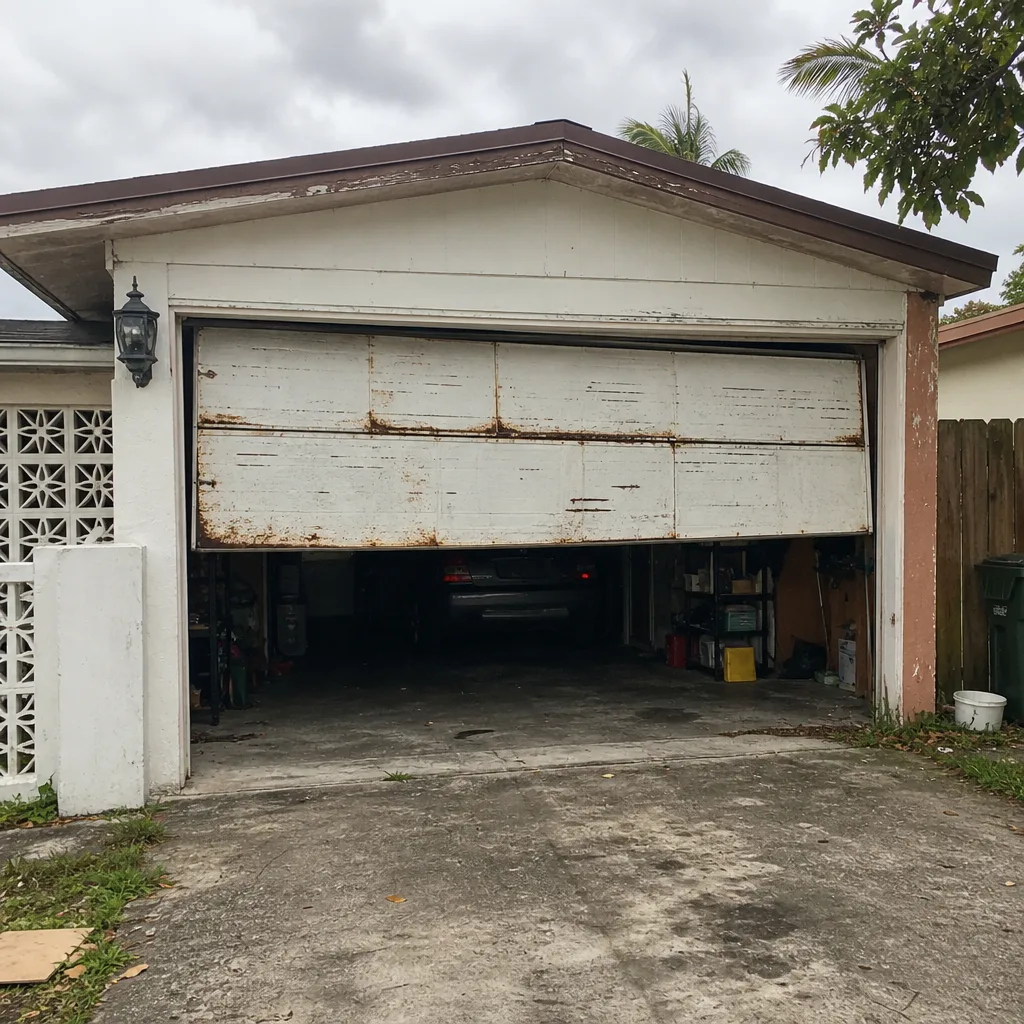 Before
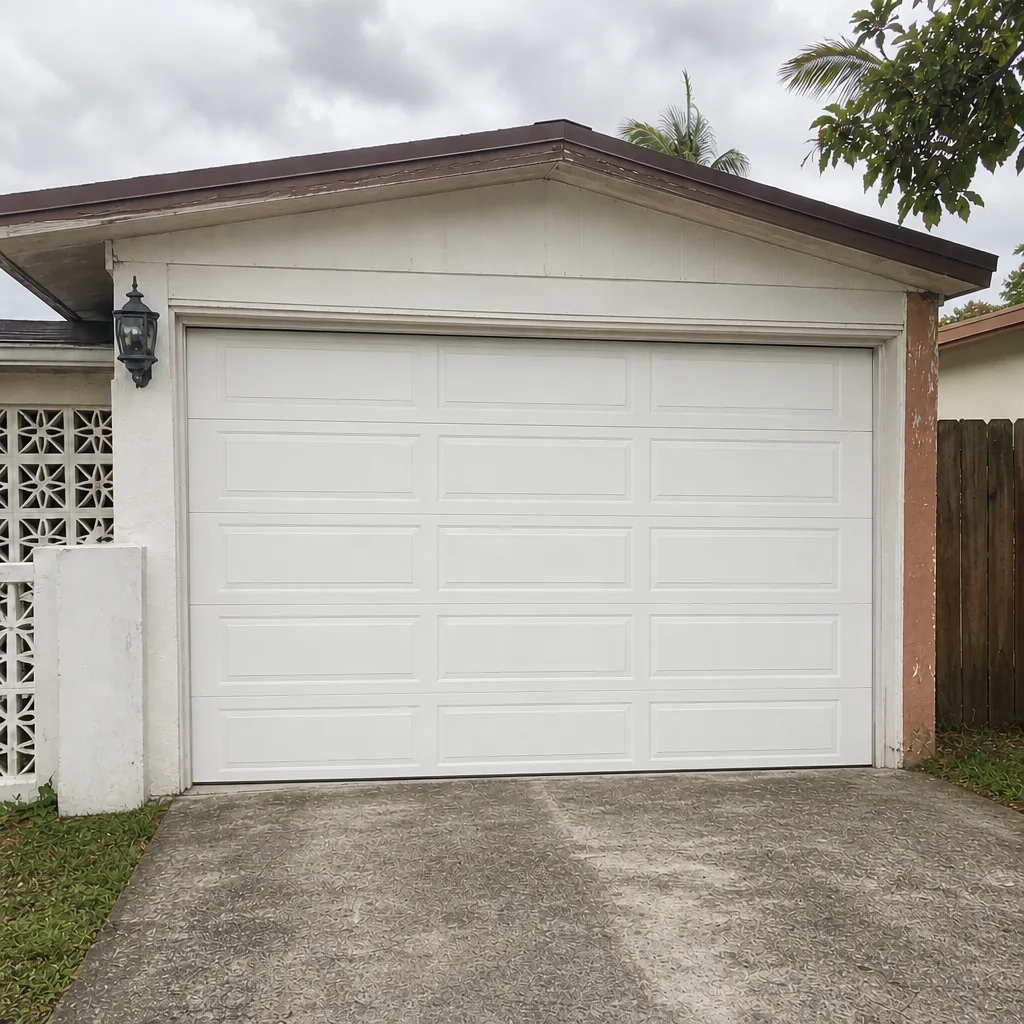 After
When to Call a Professional
Call a professional when you see a sign that fits the tier 1 list: a loud pop, a door that won’t lift, a crooked door, a snapped cable, or a door stuck open or closed for good. Those are same-day situations, and some qualify for emergency service. Call for tier 2 signs too, just with a scheduled appointment instead of urgency. And call if you’re unsure which tier your problem belongs to; describing the sound and the movement over the phone is often enough to sort it. Our technicians have up to 10 years of experience reading exactly these signals. Hialeah Garage Door Repair Pros offers free estimates in Hialeah, so the first step costs you nothing. Call (877) 492-2079 and tell us what your door is doing.
Frequently Asked Questions
The most common signs are unusual noises (grinding, popping, squealing), rust streaks on cables and anchors, white powder around concrete anchors, a swollen bottom seal, uneven travel, and an opener that reverses or strains. In Hialeah, humidity makes the visual signs especially reliable, so a look along the tracks and the bottom seal tells you a lot. Any of these is worth a closer look, and several together mean it’s time to call.
Grinding usually means worn rollers, a dry bearing, or a torsion spring that’s losing tension. Metal-on-metal scraping rarely gets better on its own, and it tends to get louder over weeks. It’s a sign to schedule service before the door stops working altogether. Call (877) 492-2079 for a free estimate.
A loud pop followed by a door that won’t lift or feels very heavy usually means a broken torsion spring, and yes, it needs same-day attention. Stop using the door and don’t try to inspect or adjust the springs yourself. Those parts are under extreme tension and can injure a careful homeowner. Call a professional right away so the door can be made safe.
You can handle small maintenance like tightening visible bolts or cleaning the tracks, but spring and cable problems should always go to a trained technician. Those parts store enough force to cause serious injury, and a wrong adjustment can make the problem worse. When in doubt, have it checked. Our technicians have up to 10 years of experience with these systems.
A quick monthly look is the right rhythm in Hialeah, where humidity and heat wear on hardware year-round. The seven-step check in this guide takes a few minutes and catches most early signs. In addition, do a fuller visual check around the anchors and seals twice a year, since moisture damage shows up there first. Call (877) 492-2079 if anything looks off.
No. A reversing opener often means the door is binding, off-balance, or too heavy, not that the opener has failed. The first step is checking whether the door moves smoothly and feels light when lifted by hand. If the door is the problem, fixing it can save you an unnecessary opener replacement. A technician can tell the difference quickly, and a free estimate settles it.
The Bottom Line
Your garage door tells you what’s wrong before it fails. Grinding, popping, squealing, and rattling point to specific parts. Rust streaks, white powder around anchors, and a swollen bottom seal are the humidity-driven signs that show up in Hialeah homes. Uneven travel and hesitation are balance and cable signals. And an opener that strains or reverses is often reporting a door problem, not its own. Sort what you find into the three risk tiers, keep a monthly check, and leave spring and cable work to a professional. When something needs fixing, from stuck to secure, call (877) 492-2079 for a free estimate.
Written by the team at Hialeah Garage Door Repair Pros.