Last updated November 21, 2026
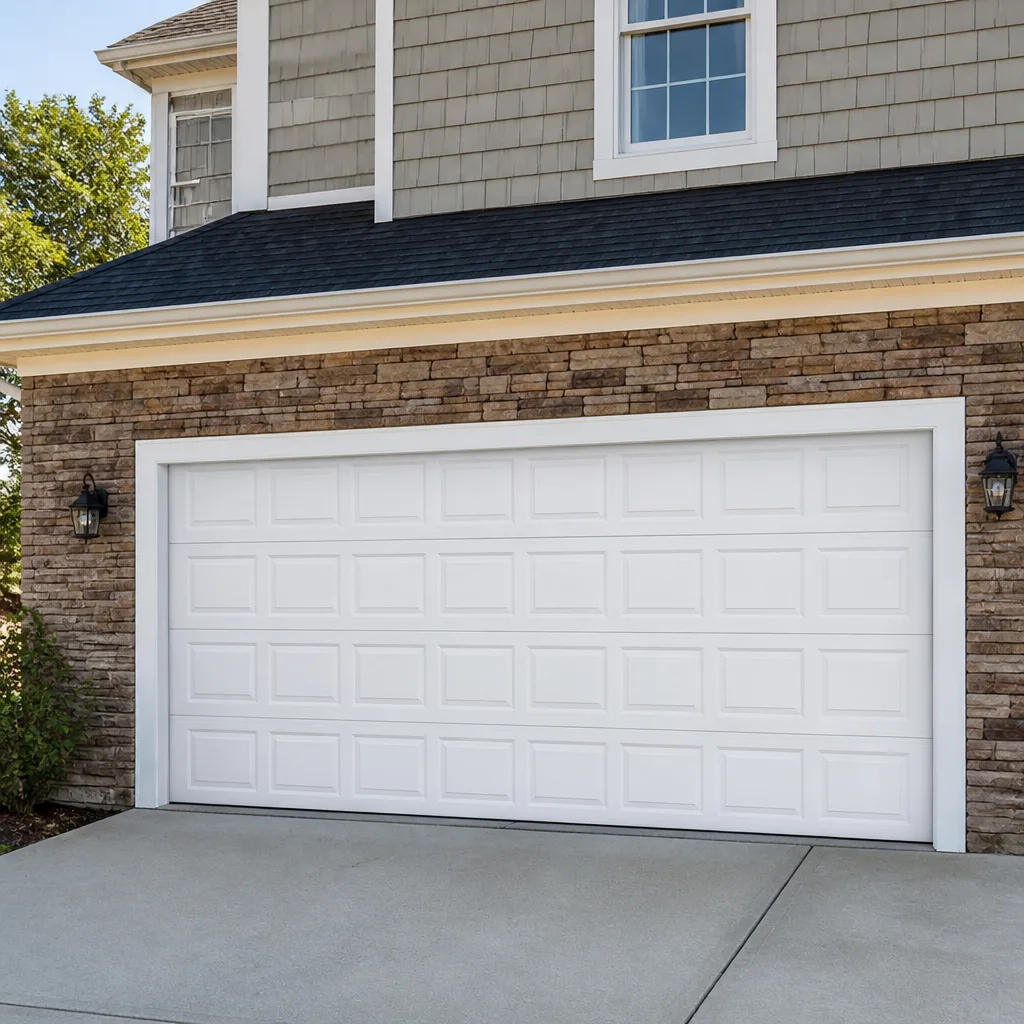 Raised-panel steel
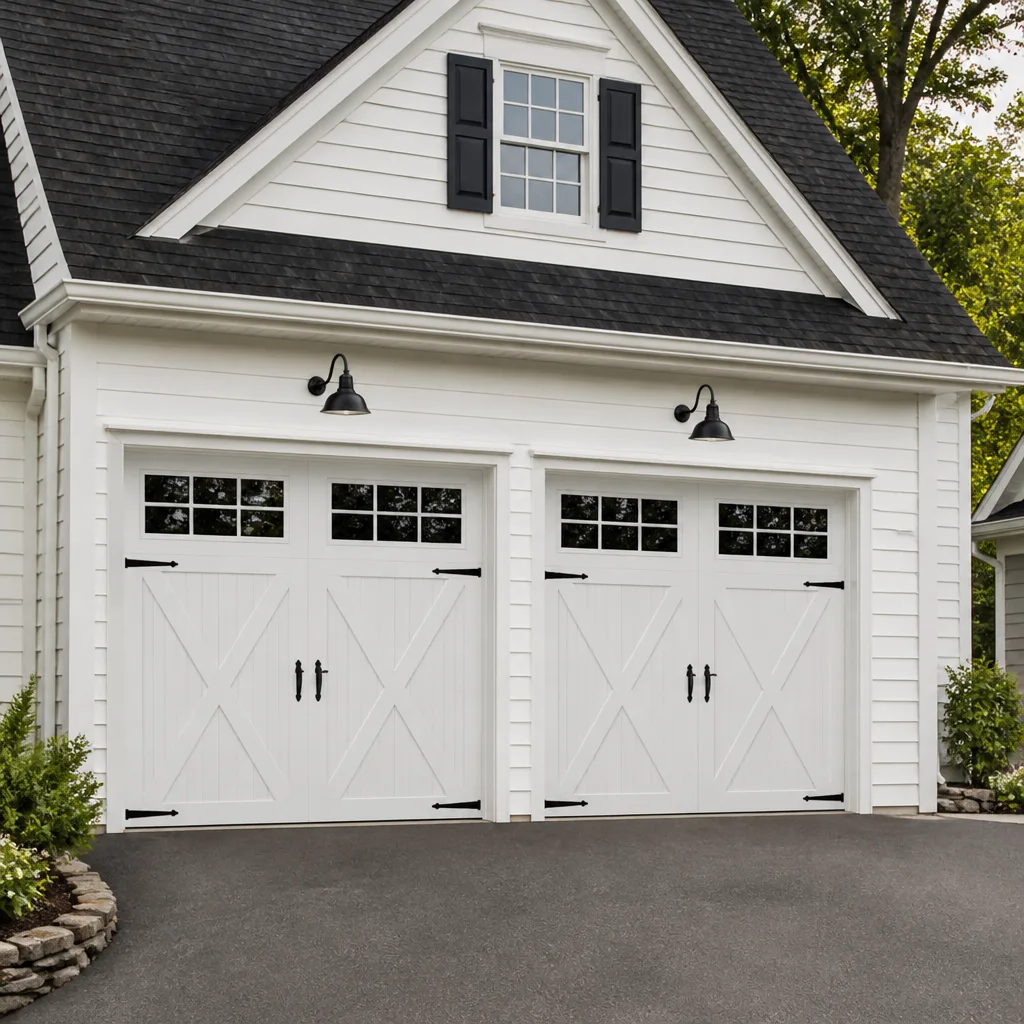 Carriage house
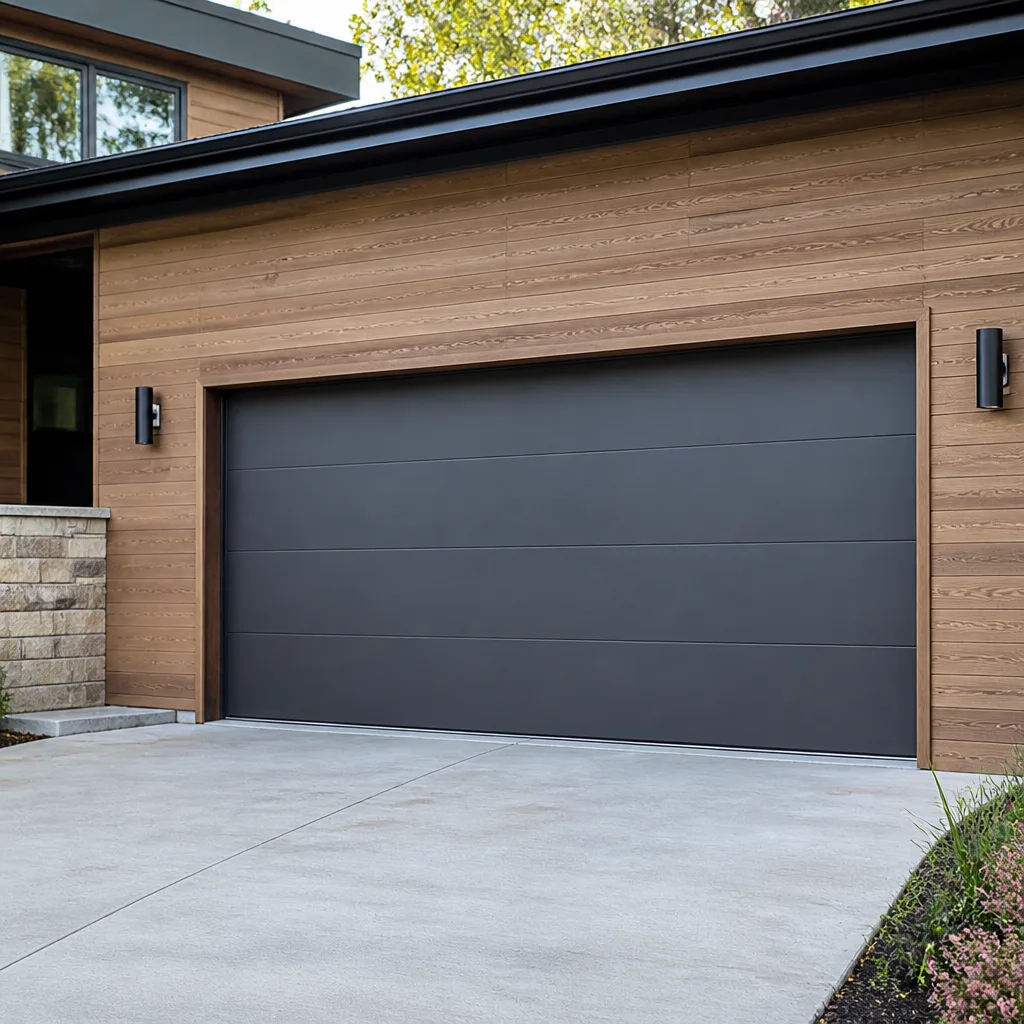 Modern flush
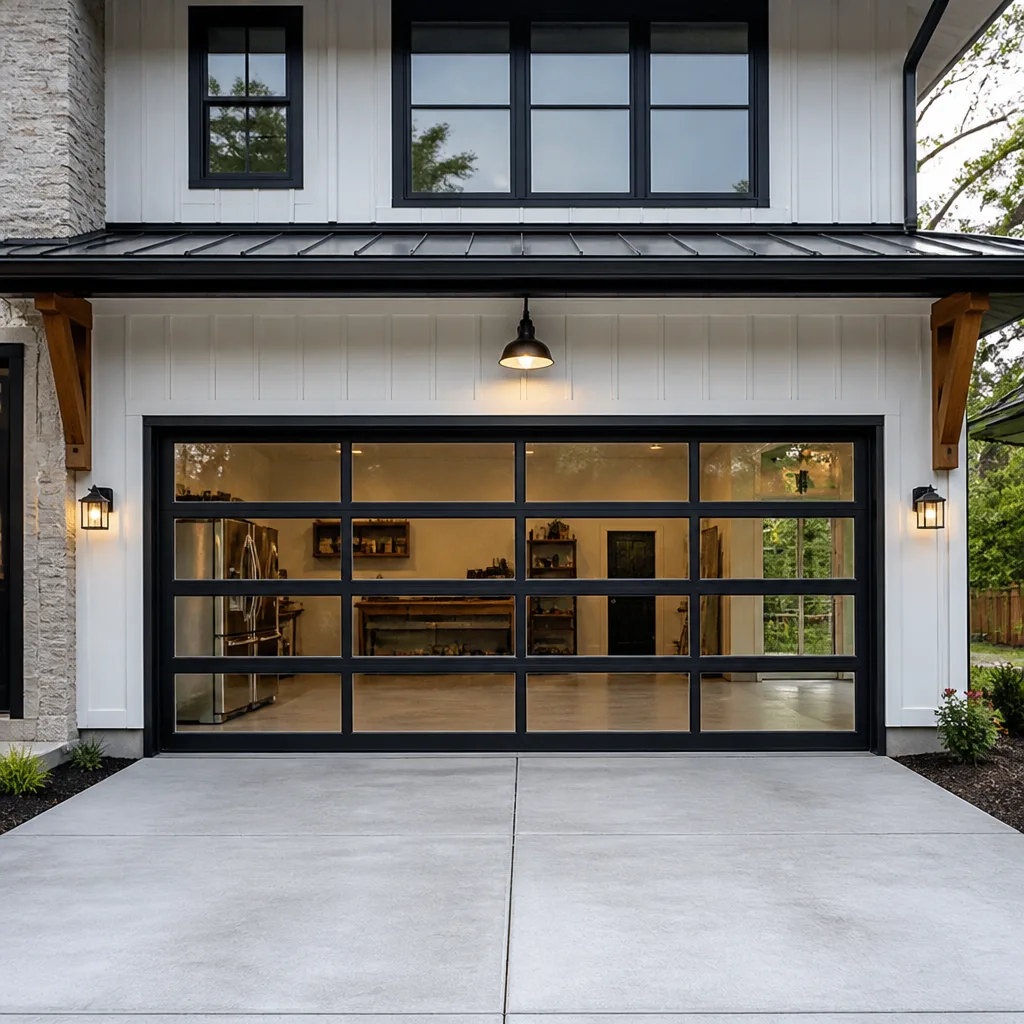 Full-view glass
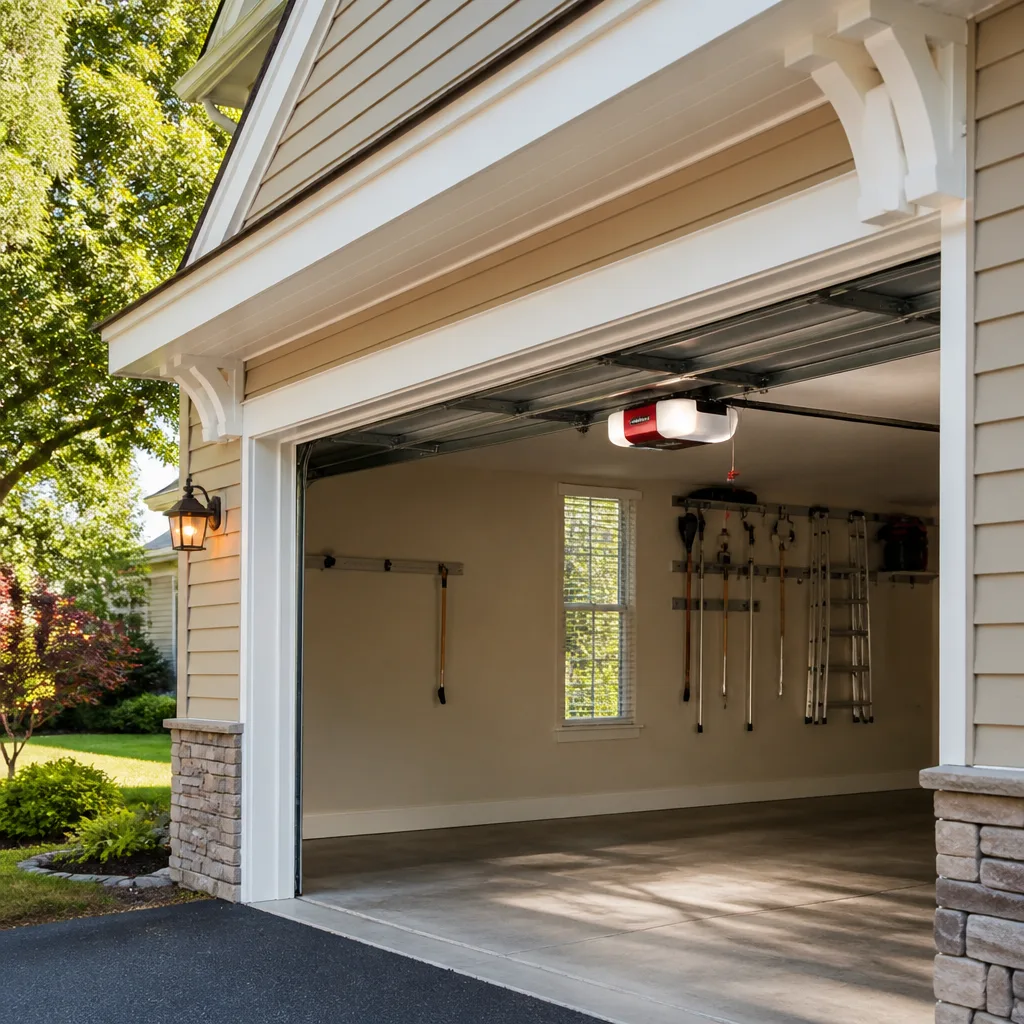 LiftMaster openers
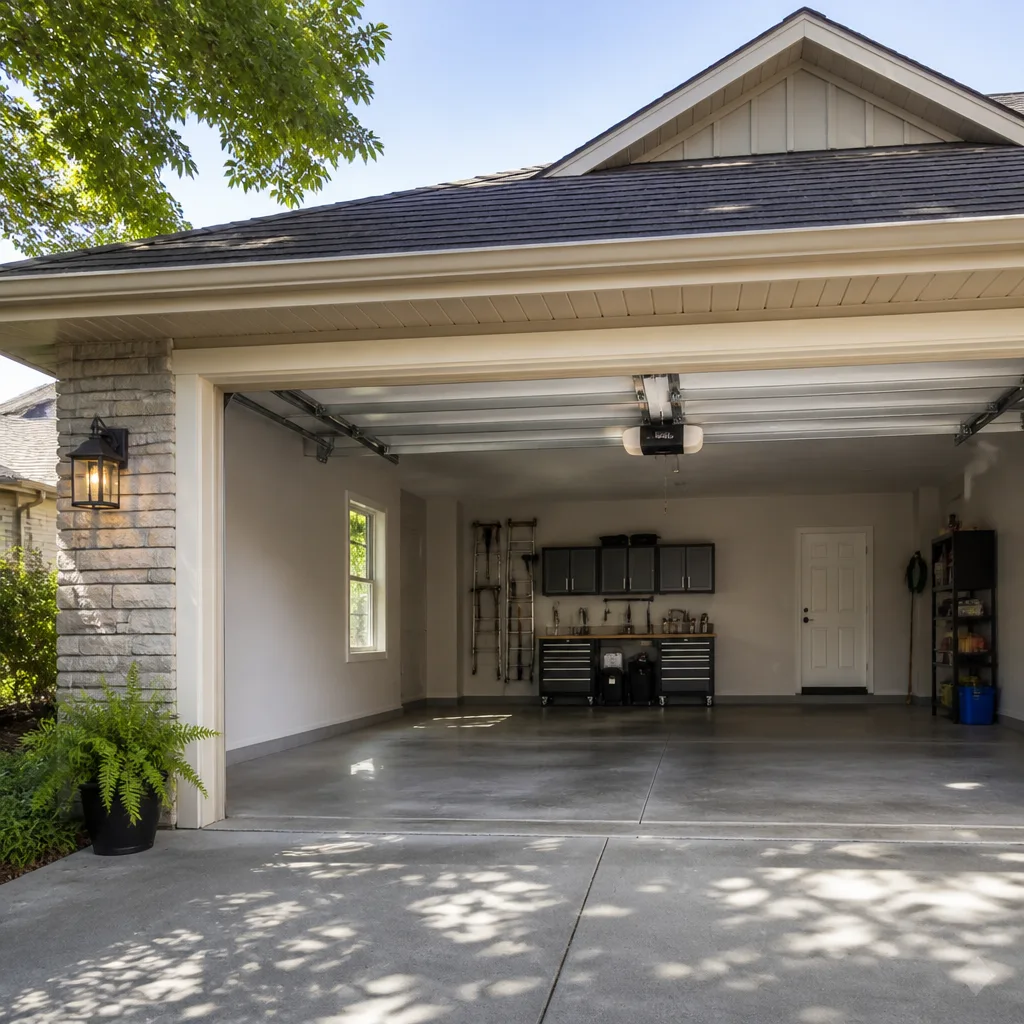 Chamberlain openers
Full 25-point door and opener safety check with every visit - springs, cables, rollers, tracks, and your LiftMaster or Chamberlain opener included
You get a price before we start. It does not change when the pro arrives.
Get your free estimateThe Complete Guide to Garage Doors in Hialeah
Most garage door advice online was written for a house in Phoenix or Atlanta, and it shows. It talks about freeze-thaw cycles, road salt, and dry heat – none of which describe what a garage door faces in Hialeah. Here, a door spends the year in sustained humidity, takes the full brunt of hurricane season, and gets installed into a concrete-block house built decades ago. Those three facts change almost every decision you’ll make about a door, from the material you pick to the spring that lifts it. This guide walks through the whole picture: how Hialeah’s housing stock shapes installation, what Miami-Dade approval actually means, how materials hold up, and how to tell a repair from a replacement. If you own a home in Hialeah, this is the guidance built for your conditions.
Quick Answer
A garage door in Hialeah needs to survive high humidity and hurricane season at the same time, so the door you choose must carry Miami-Dade product approval for wind load, fit the concrete-block construction of most local homes, and use materials that resist moisture rather than absorb it. Most repairs – springs, openers, rollers, tracks – are straightforward and can be done the same day, while a full replacement means measuring, ordering an approved door, and scheduling the install. The single most important thing to verify before any new door goes in is that it’s Miami-Dade approved, not just “wind rated.”
Styles & brands we work with
- Raised-panel steel
- Carriage house
- Modern flush
- Full-view glass
- LiftMaster openers
- Chamberlain openers
Table of Contents
- How Hialeah’s Housing Stock Shapes Your Garage Door
- Miami-Dade Approval: What It Means and How to Verify It
- Wind-Load Rated vs. Miami-Dade Approved
- Material Performance in Hialeah’s Humidity
- Common Brands Across Hialeah and What They Mean for Repairs
- Repair or Replace? A Decision Framework
- Springs, Openers, and the Safety-Critical Parts
- A Maintenance Routine Built for South Florida
How Hialeah’s Housing Stock Shapes Your Garage Door
The homes across Hialeah were largely built between the 1970s and 1990s, and most of them share the same construction: concrete block walls with a poured or framed header over the garage opening. That matters more than most homeowners realize, because the way a garage door attaches to a block wall is different from how it attaches to the wood-frame construction common in newer parts of Florida.
On a block home, the header carries the weight and the wind load, and the tracks and opener mount into masonry rather than studs. When a technician measures for a new door or a new opener, they’re checking header condition, track clearance, and how solid the anchor points actually are. A block wall that’s been holding a heavy door for thirty years can develop hairline cracks around the anchors, and those need attention before a new door goes up.
Here’s what that means in practice for a Hialeah homeowner:
- Header space: Older block homes sometimes have a lower header than a modern door expects, which limits which door heights and track configurations will fit without modification.
- Track clearance: Low-clearance setups are common, and that affects whether you can use a standard torsion system or need a low-headroom configuration.
- Opener mounting: A ceiling-mounted opener has to anchor into solid framing above the garage. In older block construction, that framing isn’t always where a universal bracket expects it, so mounting gets customized.
- Door weight: The original door was sized for the original opening. Swapping to a heavier material without recalculating spring tension causes premature wear and unsafe operation.
None of this is a reason to avoid a new door. It’s a reason to have someone measure the actual opening and check the header before ordering anything. In our experience working on Hialeah homes, a proper measure takes minutes and prevents the most expensive mistakes.
Miami-Dade Approval: What It Means and How to Verify It
Miami-Dade product approval – the Notice of Acceptance, or NOA – is the county’s formal certification that a product meets the wind-load requirements for this region. For a garage door, that’s not optional paperwork; it’s the difference between a door that’s permitted to go in and one that isn’t. If a door doesn’t carry the approval, the permit won’t pass, and that can mean taking the door back off the house.
A NOA isn’t a general “this product is strong” label. It’s product-specific and, critically, installation-specific. The approval lists the exact door model, the exact wind-load rating, and the specific installation method it was tested under. A door that carries an NOA for one anchor pattern may not be approved for another. And a door installed correctly to its NOA can still fail inspection if it was anchored differently than the approval describes.
Here’s how a Hialeah homeowner can verify a door carries the approval:
- Ask for the NOA number. It’s a specific identifier tied to the product, not a sticker that says “hurricane approved.” Write it down.
- Match the number to the exact model. The approval should name the door model going on your house – not the manufacturer’s general lineup.
- Check the installation method. The NOA specifies how the door and its anchors must be installed. The install has to match, not approximate.
- Keep the paperwork. Homeowners should have the approval documentation after the job. It matters at resale and if a future inspector ever asks.
- When in doubt, ask the city’s building department. Permit requirements and inspection standards are set locally, and a quick call to the Hialeah building department settles questions definitively.
We treat approval as the first question on every replacement, not the last. It’s the one detail that can void an otherwise perfect install.
Wind-Load Rated vs. Miami-Dade Approved
“Wind-load rated” and “Miami-Dade approved” get used interchangeably in sales conversations, and they aren’t the same thing. A door can carry a wind-load rating from a manufacturer and still lack the Miami-Dade Notice of Acceptance needed to pass a local permit. The rating describes how the door performs; the approval is the county’s certification that it meets local code for a given installation. You need both, and you need them to match.
Why does the distinction matter at permit time? Because inspectors in this region work from the NOA. A manufacturer’s spec sheet that lists a wind-load figure doesn’t substitute for the county approval, and a door installed on the strength of a spec sheet alone can get flagged. That means rework – removing the door, reordering an approved replacement, and starting over.
The distinction also matters for insurance and resale, though the specifics depend on your policy and your buyer. What’s concrete is this: a Miami-Dade approved door with its NOA on file is the standard. If a quote for a new door doesn’t mention the NOA, ask for it before you sign. A company that can’t produce the number for the specific model isn’t giving you a documented approved install.
For repairs, approval rarely comes into play – you’re keeping the door and fixing what failed. But if a repair turns into a replacement, the approval question returns and it’s best settled early. If you’re weighing whether to repair or go new, our garage door repair service starts with an honest diagnosis rather than a push toward replacement.
Material Performance in Hialeah’s Humidity
The right material for a Hialeah garage door is the one that holds up to year-round humidity without swelling, warping, or rusting from the inside out. Steel, aluminum, and wood composite each handle these conditions differently, and the differences show up over years, not months.
Steel remains the most common choice for good reason. It’s strong for its weight, holds a finish well, and takes wind-load reinforcement predictably. The catch is moisture. A steel door is only as good as its finish and its galvanizing, and any scratch or dent that exposes bare metal becomes a rust point in this climate. Regular inspection of the bottom panel and edges – where water collects – keeps a steel door in service far longer.
Aluminum won’t rust the way steel does, which makes it a reasonable fit for humid conditions. It’s lighter, which can simplify opener strain, but that same lightness means it dents more easily and often needs added reinforcement to meet wind-load requirements. It’s a solid choice where weight and corrosion resistance matter most.
Wood composite looks the best and behaves the worst if it’s not maintained. In sustained humidity, wood-based materials absorb moisture, and absorbed moisture means swelling, sticking, and eventually warping. A composite door in Hialeah needs a genuine maintenance routine – sealing, inspecting, refinishing – that a steel or aluminum door doesn’t. Homeowners who want the look will get years from it if they keep up; those who won’t maintain it should steer toward metal.
- Humidity: favors aluminum and well-finished steel; penalizes wood-based materials without upkeep.
- Hurricane season: all materials can be reinforced, but the reinforcement has to be part of the approved installation.
- Weight and opener load: heavier doors put more strain on the opener and springs; lighter doors may need reinforcement to hit wind-load targets.
- Maintenance appetite: steel and aluminum ask little; wood composite asks more. Match the material to the effort you’ll actually put in.
If you’re unsure which material suits your home and your habits, a free measure and a conversation about how the door will be used settles it faster than a catalog.
Common Brands Across Hialeah and What They Mean for Repairs
Walk through a Hialeah neighborhood and you’ll see the same names on garage doors and openers again and again. Doors from Clopay, Amarr, Wayne Dalton, and Raynor are common on the housing stock here, and openers from LiftMaster, Chamberlain, Genie, and Craftsman sit on the ceilings of a great many homes. That consistency is good news for homeowners, because it means parts and repair knowledge are both available locally – if the technician actually knows the system.
It also shapes repair timelines. A technician who works across these brands can diagnose on arrival rather than spending the first visit identifying the system and ordering a part. When a spring fails or an opener quits, that difference is measured in days. We work on all of these brands specifically so a Hialeah homeowner doesn’t get sent elsewhere because their door “isn’t the brand we carry.”
Consider what brand consistency means in practice:
- Springs and hardware: torsion and extension springs vary by door weight and drum configuration, not just brand, so measuring correctly matters more than the nameplate.
- Opener parts: LiftMaster and Chamberlain share a lot of design lineage, so familiarity with one helps with the other. Genie and Craftsman each have their own logic, and knowing both shortens diagnosis.
- Smart and legacy openers: the same brand that made an opener decades ago may still make the modern connected version, and troubleshooting connectivity is a different skill than fixing a stripped gear.
- Replacement matching: a new door and an existing opener have to cooperate. Knowing both ends of the system keeps you out of an unnecessary opener swap.
When an opener is the problem rather than the door, our garage door opener repair covers both mechanical failures and the connectivity headaches that come with smart openers.
Repair or Replace? A Decision Framework
The honest answer to “repair or replace” depends on the door’s condition, not on its age alone. A well-maintained door can serve far longer than its owner expects, and a door that’s been ignored can be past saving at a relatively young age. What matters is the state of the structure, the balance, the finish, and whether the door still meets wind-load requirements for this region.
Here’s the framework we walk homeowners through, in order:
- Assess the panels and structure. Dents and scratches are cosmetic. Bent tracks, cracked panels, and a sagging top section are structural and often point toward replacement.
- Check the balance and spring system. A door that’s out of balance or has weak springs can usually be fixed with a spring or hardware repair, not a whole new door.
- Evaluate the opener against the door. If the opener is failing and the door is sound, replacing the opener alone is often the right call. If the door is heavy and the opener is undersized, the pairing may need to change.
- Confirm the wind-load situation. If the existing door isn’t approved and a replacement is in the picture, the new door has to be. This can tip a borderline decision toward replacement.
- Weigh the finish. A steel door that’s lost its finish across multiple panels will keep rusting until it’s refinished or replaced. That’s a cost question, not a safety one.
We start every call with repair-first thinking. The right fix, not the easiest upsell, is what keeps a door working and a homeowner out of an unnecessary replacement. When the door is genuinely past repair, though, saying so clearly is the honest answer.
Springs, Openers, and the Safety-Critical Parts
Garage door springs are the most dangerous component in the whole system, and that deserves a straight conversation. A torsion spring under tension stores a huge amount of energy – enough that a spring that lets go is genuinely dangerous, and enough that adjusting or replacing one without the right tools and training is how people get seriously hurt. We treat spring work as a specialty, not a line item, and we tell homeowners plainly: this is not a job to attempt yourself.
What you can do safely is recognize the warning signs. A door that suddenly feels much heavier, a loud bang from the garage, a door that opens a few inches and stops, or a visible gap in a spring coil all point to a spring problem. When you see any of these, don’t force the door. Jammed doors and a vehicle or person trapped on the wrong side are exactly the situation our emergency garage door service is built for.
Openers have their own failure patterns. A chain or belt that’s worn, a gear that’s stripped, a safety sensor knocked out of alignment, or a smart opener that won’t reconnect to Wi-Fi – each is a distinct problem with a distinct fix. Our garage door spring repair and opener work both start with a full-system look, because a spring problem and an opener problem can present the same way to a homeowner.
Our technicians have up to 10 years of experience, and spring and opener work is where that experience earns its keep. If a spring has failed or a door won’t close, call (877) 492-2079. We also confirm the price before any work starts, so the number you agree to is the number you pay.
A Maintenance Routine Built for South Florida
A Hialeah garage door needs a slightly different maintenance rhythm than one in a dry climate, and the routine is simple. The goal is to keep moisture out of places it shouldn’t be, keep the moving parts moving, and catch the small failures before they become expensive ones.
- Wipe down and inspect the bottom panel. The bottom panel and edges are where moisture collects and rust starts. A quick visual check each season catches it early.
- Lubricate the moving parts. Rollers, hinges, and springs benefit from a proper garage door lubricant, not a generic spray. This is especially worthwhile before the humid months.
- Test the balance. Disconnect the opener and lift the door halfway. A balanced door stays put. One that drops or rises on its own needs adjustment.
- Check the safety sensors. The sensors at the base of the tracks should be clean, aligned, and able to reverse the door. It’s a quick test that prevents a stuck door later.
- Look at the finish. Touch up scratches and dings before humidity turns them into rust. A small jar of touch-up paint goes a long way here.
- Listen. Grinding, squealing, or a door that seems louder than it used to be are early warnings. Address them before they turn into a failed spring or opener.
None of this is difficult, and most of it takes minutes. The homeowners who keep up with it are the ones who get the most years out of their door. When something looks off, that’s the moment to bring in a technician rather than wait. Explore our full range of Hialeah Garage Door Repair Pros services if you’d like a fresh set of eyes on your system.
Common Mistakes to Avoid
- Buying a “wind-rated” door without an NOA. A manufacturer’s wind-load spec isn’t Miami-Dade approval. Buying on the spec alone can mean a permit failure and a door that has to come back off the house.
- Replacing a door without measuring the actual opening first. Older concrete-block construction in Hialeah often has headers and track clearances that don’t match a catalog door. Measure before ordering, every time.
- Trying to fix a broken spring yourself. This is the most serious safety mistake in the trade. A spring under tension can cause severe injury, and it needs a trained technician with the right tools.
- Ignoring a small rust spot on a steel door. In this humidity, a tiny scratch on the bottom panel becomes a rust-through if it isn’t touched up. The fix takes minutes now and a lot more later.
- Picking a door solely on appearance. A wood composite that looks great on day one needs real maintenance in this climate. Match the material to the upkeep you’ll actually do.
- Assuming a new opener will fix a heavy-feeling door. Often the door is out of balance or the springs are weak, and a new opener just masks the real problem while wearing out faster.
- Calling a one-brand dealer for a repair. If your door or opener isn’t their brand, you may get sent elsewhere. Choose a technician who works across the brands already in Hialeah’s homes.
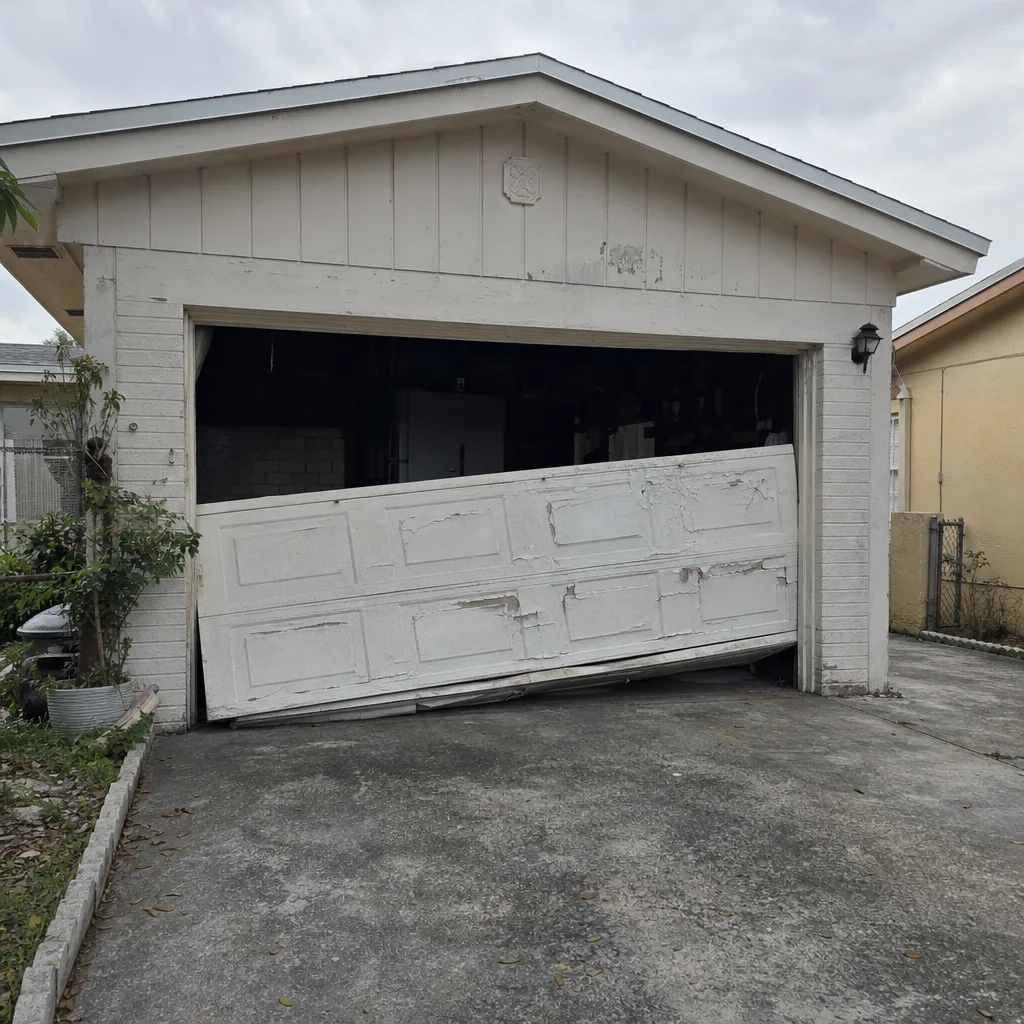
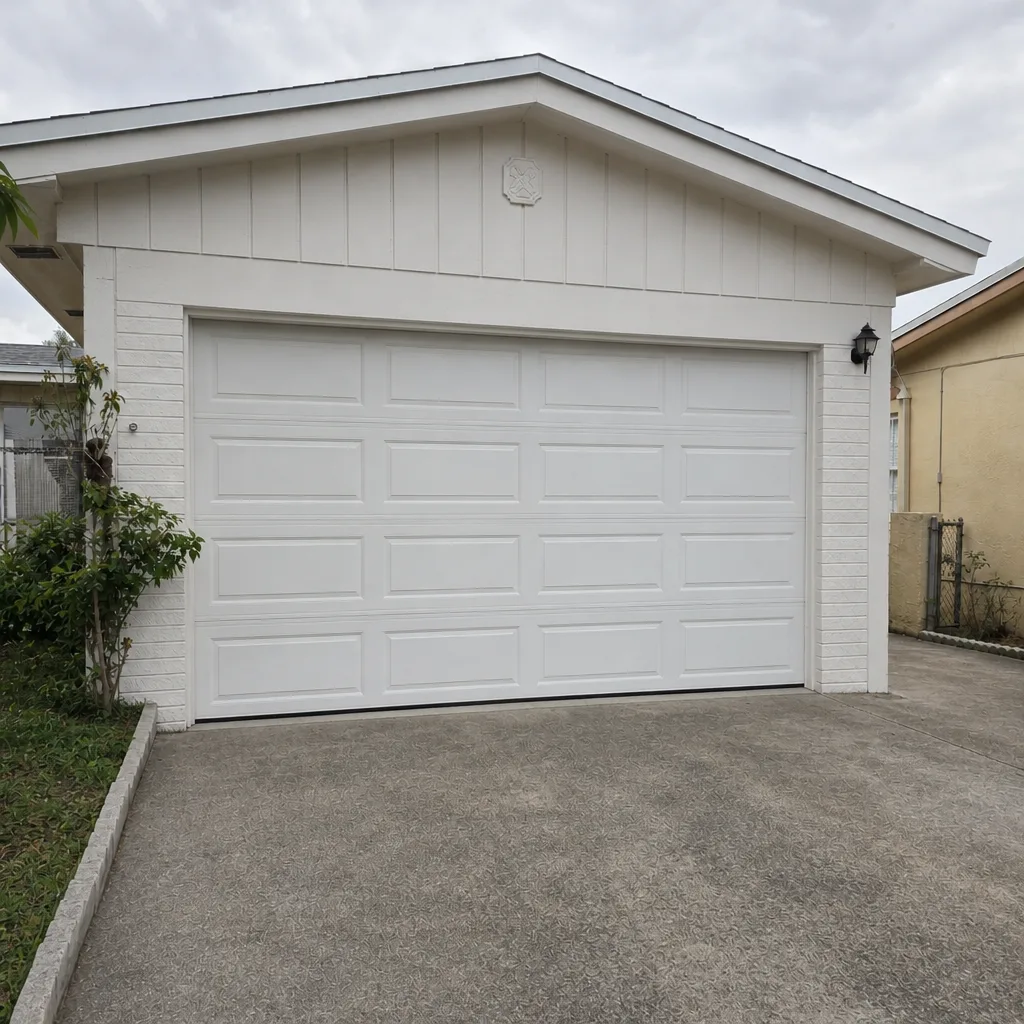
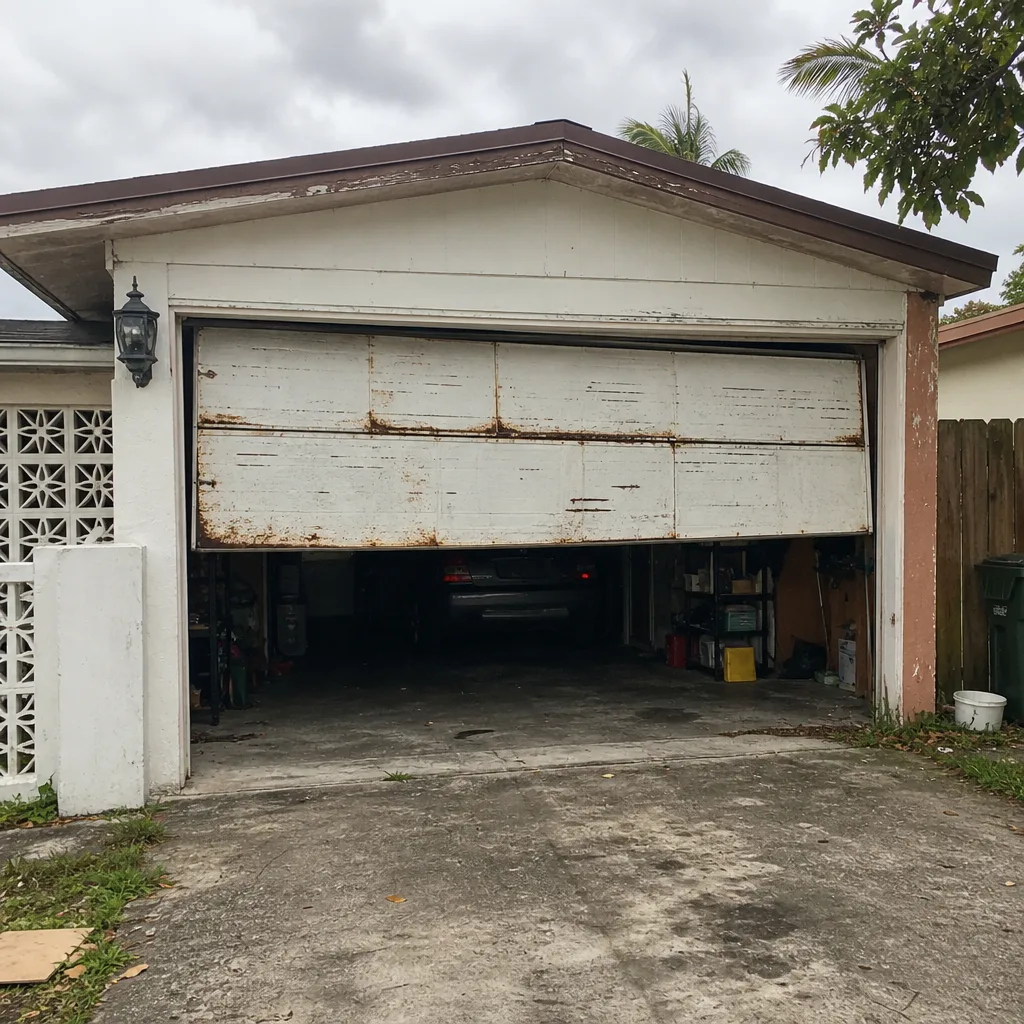
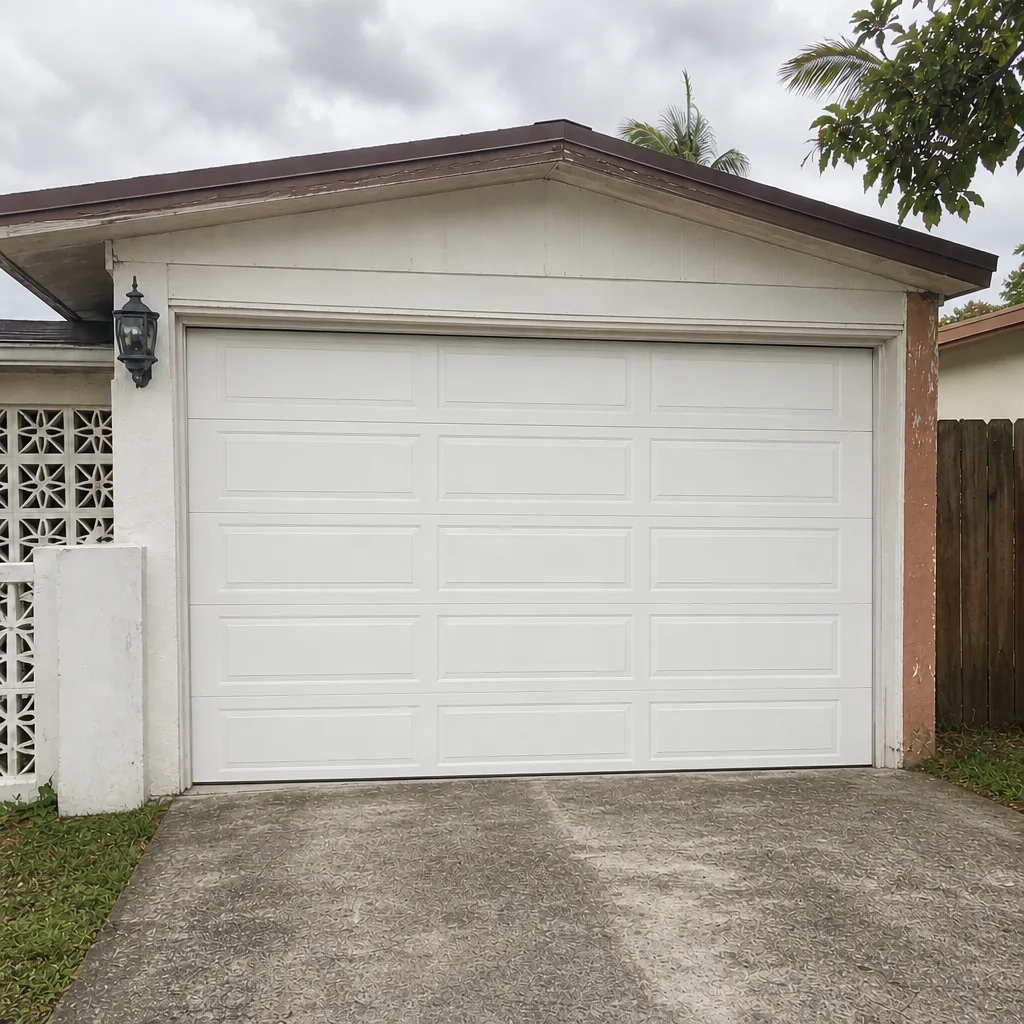
See the difference
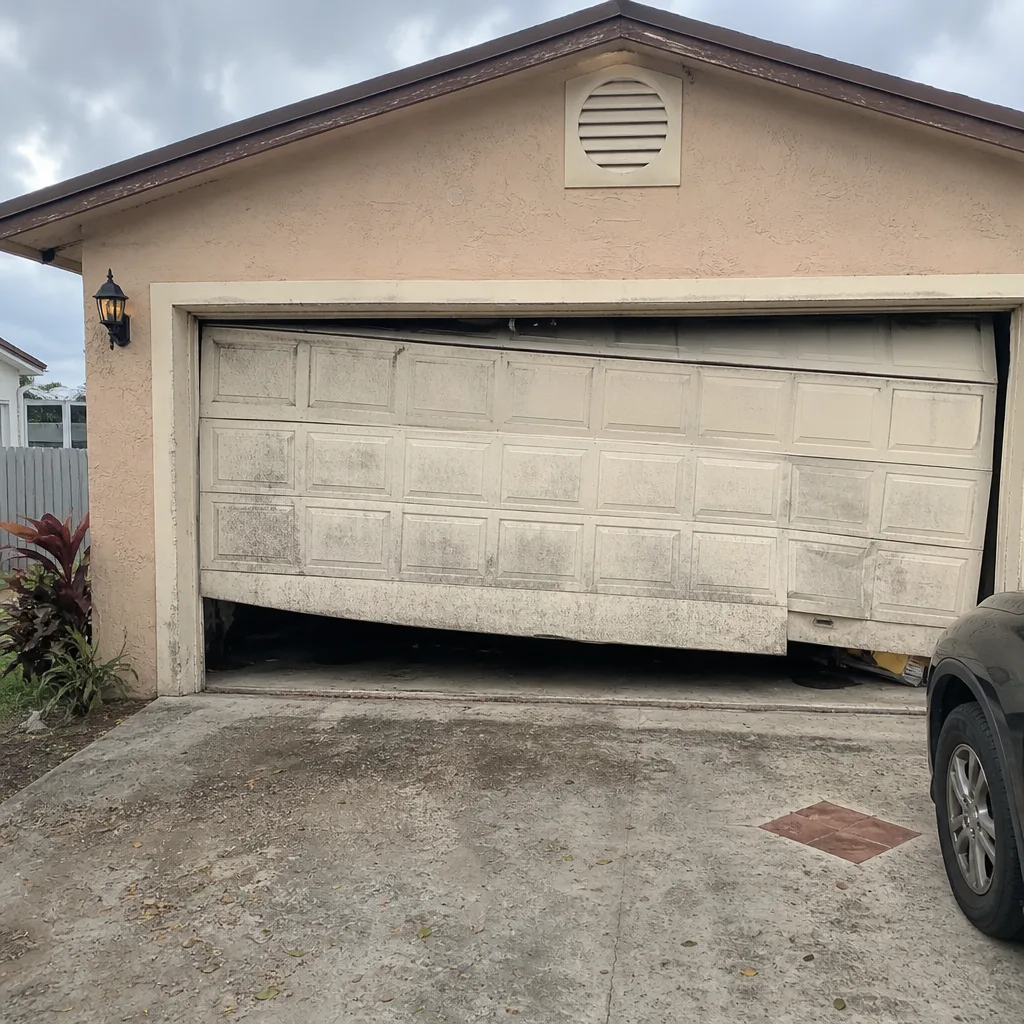 Before
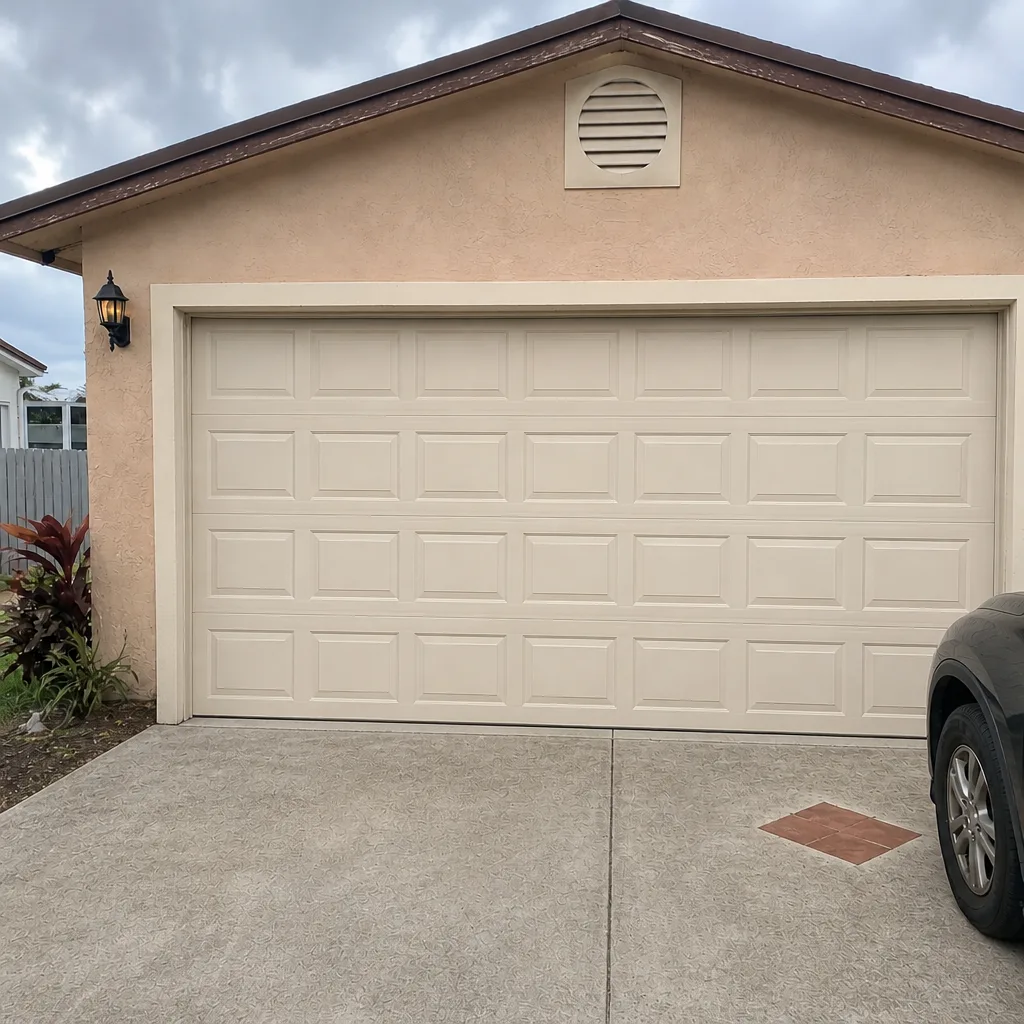 After
 Before
 After
 Before
 After
When to Call a Professional
Call a professional when a spring has failed or looks damaged, when the door won’t open or close reliably, when the opener runs but the door doesn’t move, or when a door is stuck open and the house is unsecured. Also call when you’re considering a replacement, because the measure and the approval check should happen before anything is ordered. And call when a small problem is starting to repeat – a door that needs constant adjustment or an opener that’s developed a new noise is telling you something. Hialeah Garage Door Repair Pros offers free estimates in Hialeah – call (877) 492-2079. We confirm the price before any work begins, so there are no surprises on the invoice.
Frequently Asked Questions
Yes. A garage door installed in Hialeah should carry Miami-Dade product approval (a Notice of Acceptance) for the specific model and installation method. The approval is what the county uses to confirm the door meets wind-load requirements, and a permit will not pass without it. Ask for the NOA number for your exact door and keep the documentation after the job.
Most garage door repairs are quoted per job after a technician assesses the door, because the cost depends on the part that failed and the condition of the surrounding system. Spring repair, opener repair, and hardware fixes each fall in different ranges, which is why we give a written estimate rather than a phone guess. The price is agreed before any work starts, and the written quote is what you pay. Call (877) 492-2079 for an exact quote – estimates are free.
In many cases, yes. Most repairs – springs, openers, rollers, and track adjustments – can be handled on the same visit once we see the door. Emergencies like a door stuck open or a vehicle trapped inside get priority because the home is unsecured or someone is stranded. Call (877) 492-2079 and we’ll tell you what’s realistic for your situation.
We work on all the major residential brands, including LiftMaster, Chamberlain, Genie, Craftsman, Clopay, Amarr, Wayne Dalton, and Raynor. That breadth matters in Hialeah because local homes carry a mix of these, and a technician who knows the system diagnoses faster and rarely needs to send you elsewhere for parts.
Treat a door stuck open as urgent, because your home is unsecured and the door is exposed to weather. A door stuck closed with a vehicle trapped inside is just as pressing. Our emergency garage door service exists for exactly these situations. Call (877) 492-2079 and we’ll get you from stuck to secure as quickly as we can.
A replacement is measured, approved, ordered, and scheduled rather than done same-day, because the door has to match your opening and carry the right Miami-Dade approval. Once the correct door is on hand, the install itself is typically completed in a single visit. The measure and the approval check come first, so plan for a short wait between the estimate and the install.
The Bottom Line
Garage doors in Hialeah live in a specific environment – sustained humidity, hurricane season, and a housing stock built mostly in concrete block between the 1970s and 1990s. The right door for a Hialeah home carries Miami-Dade approval for the exact model and install, fits the actual opening, and uses a material matched to how much upkeep you’ll do. Repairs, especially spring and opener work, are usually fast and worth doing before a replacement becomes necessary. Springs are the one part you should never touch yourself. Get a free measure and a written estimate first, and verify the NOA before anything is ordered. That’s the whole guide in a paragraph: respect the climate, respect the code, and get a technician who knows your brand.
Call (877) 492-2079 for a free estimate. We’ll measure the opening, check the approval, and give you a written price before any work starts.
Written by the team at Hialeah Garage Door Repair Pros.