Last updated November 21, 2026
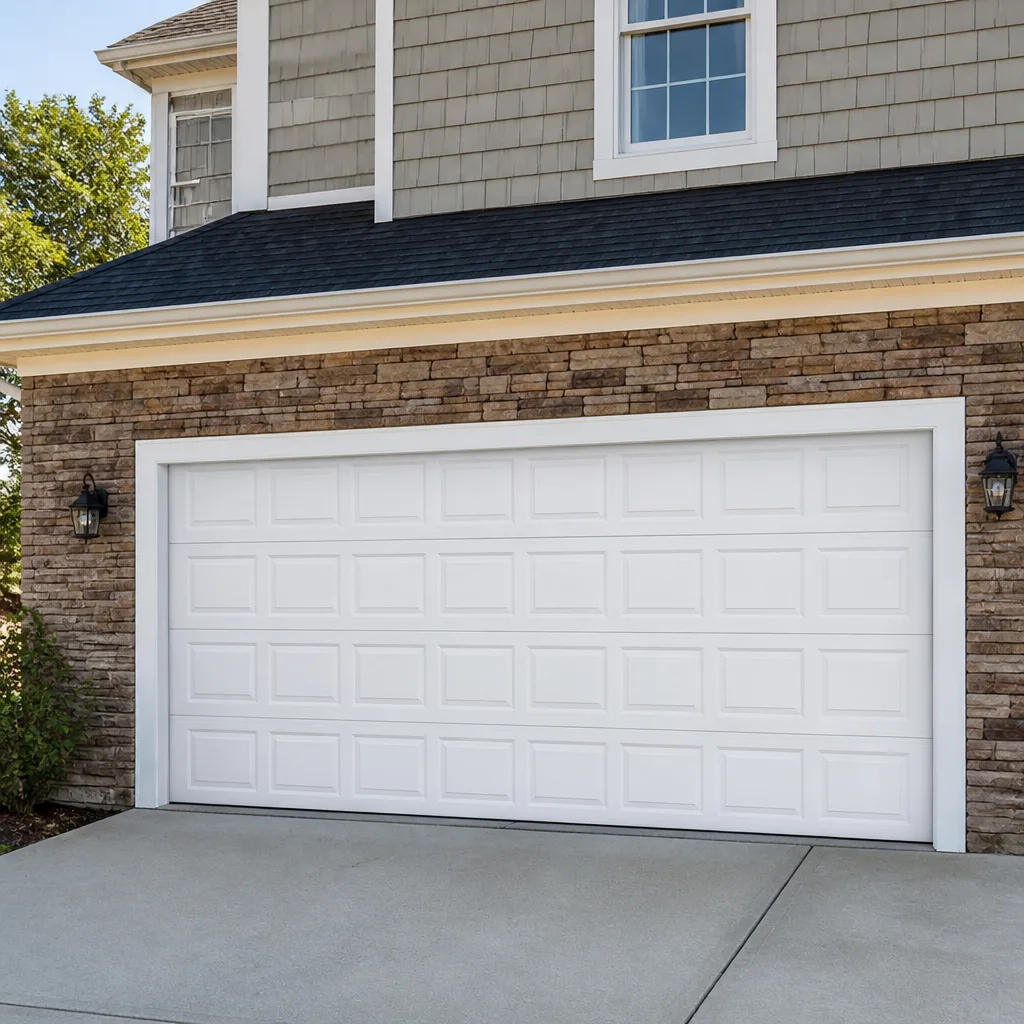 Raised-panel steel
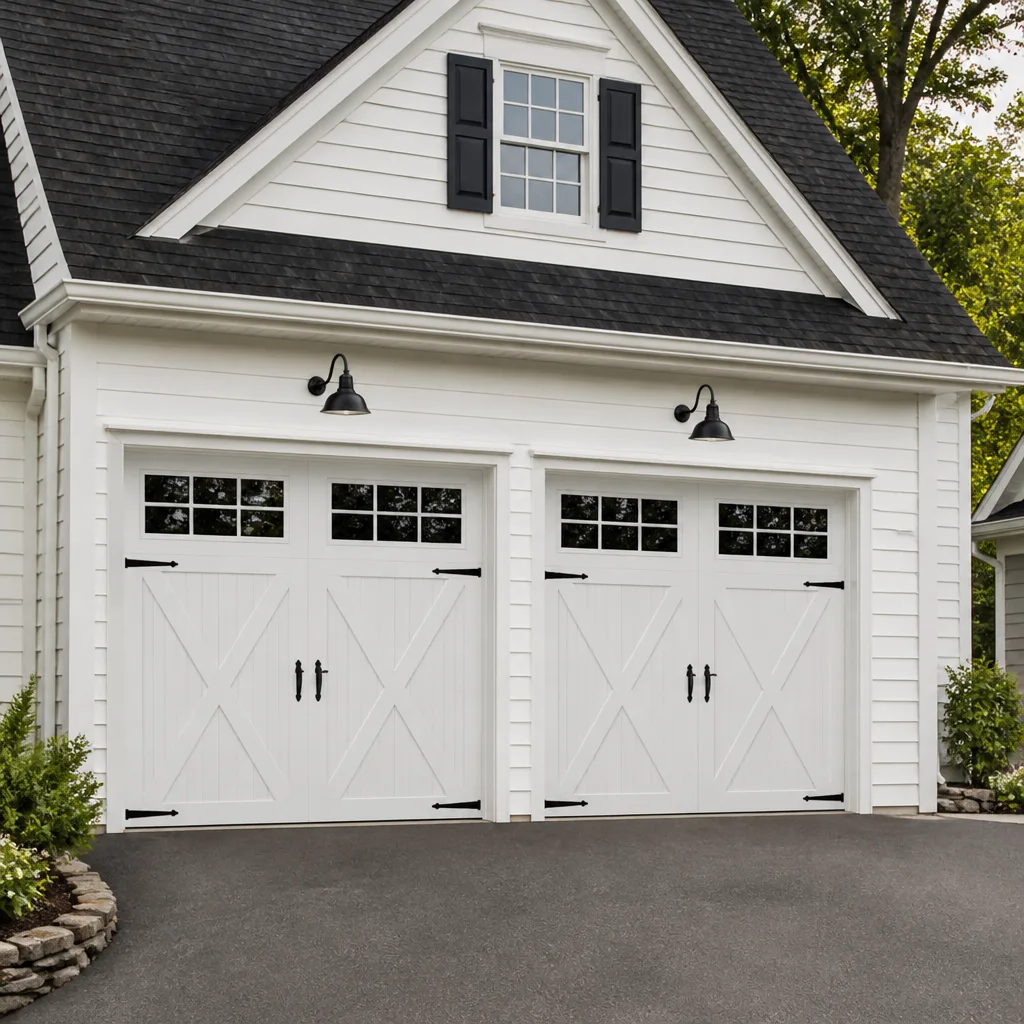 Carriage house
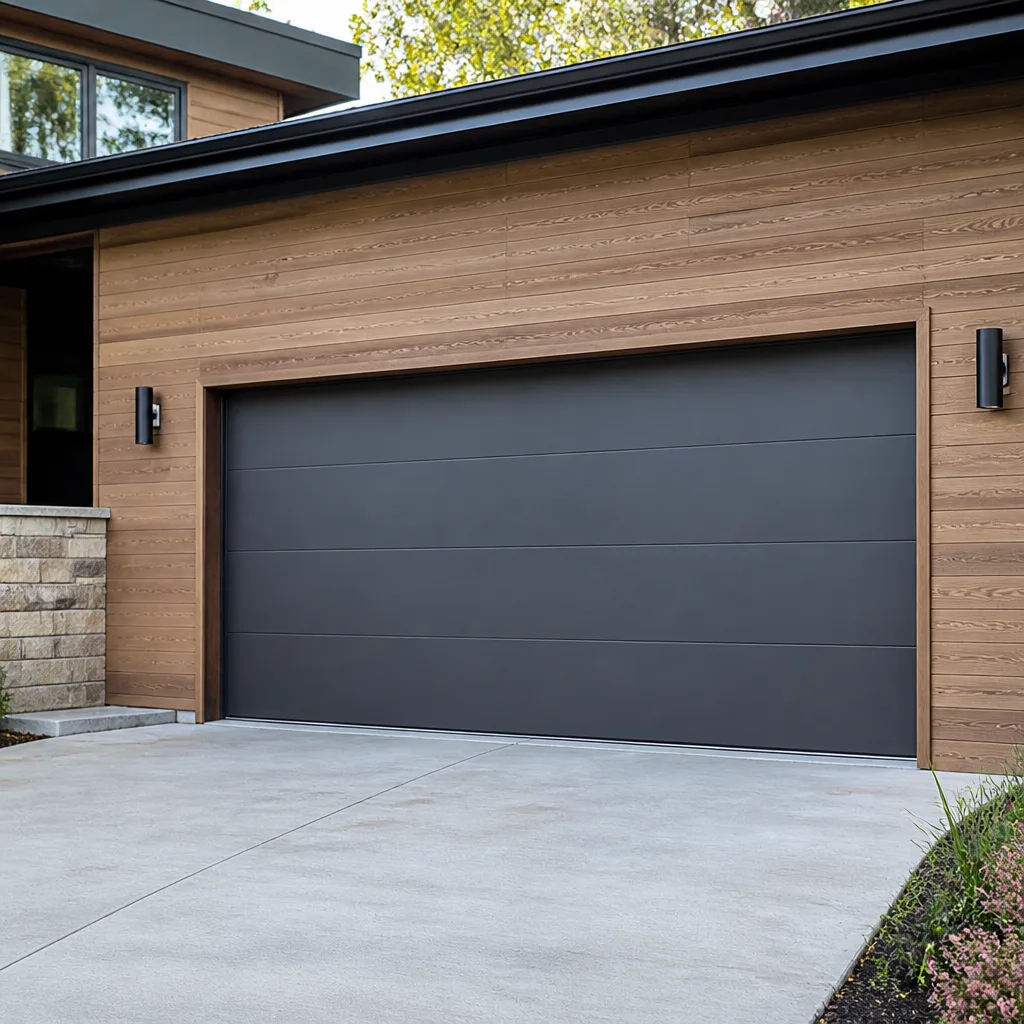 Modern flush
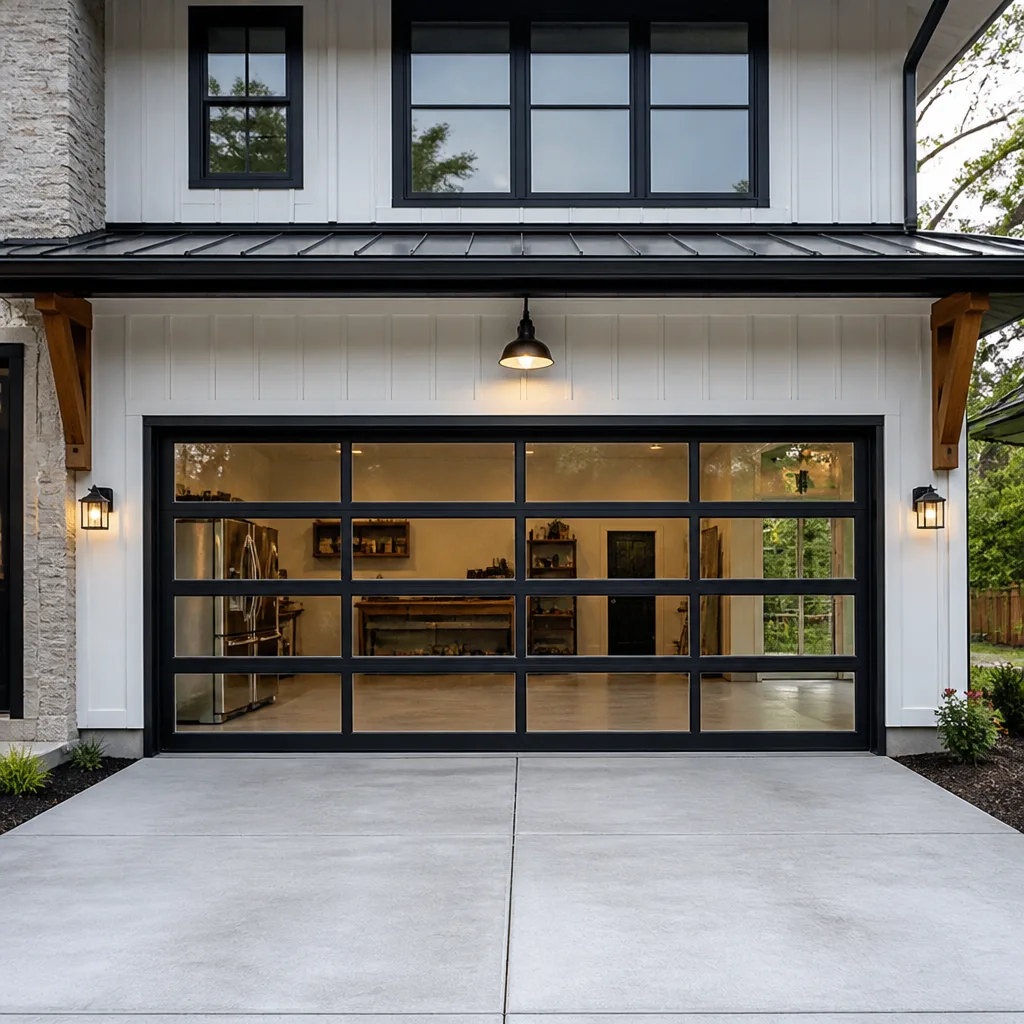 Full-view glass
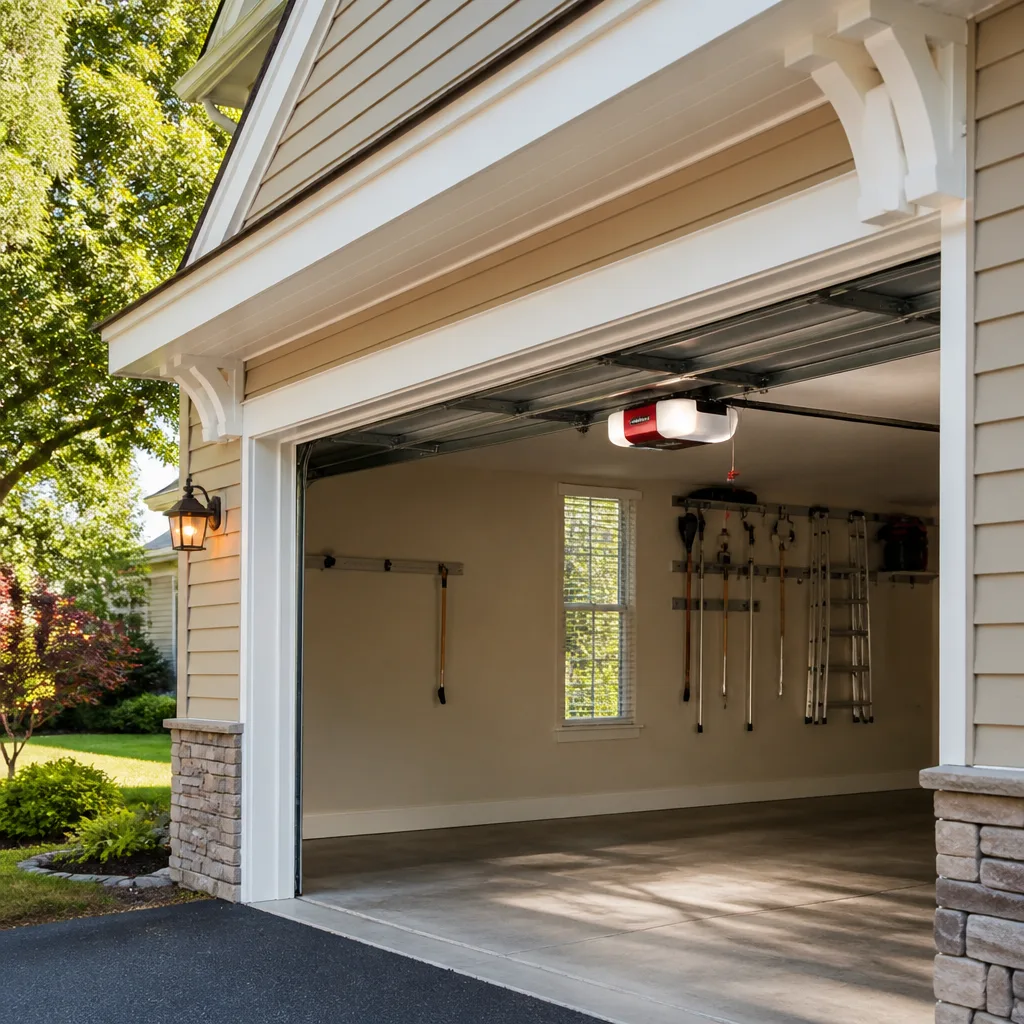 LiftMaster openers
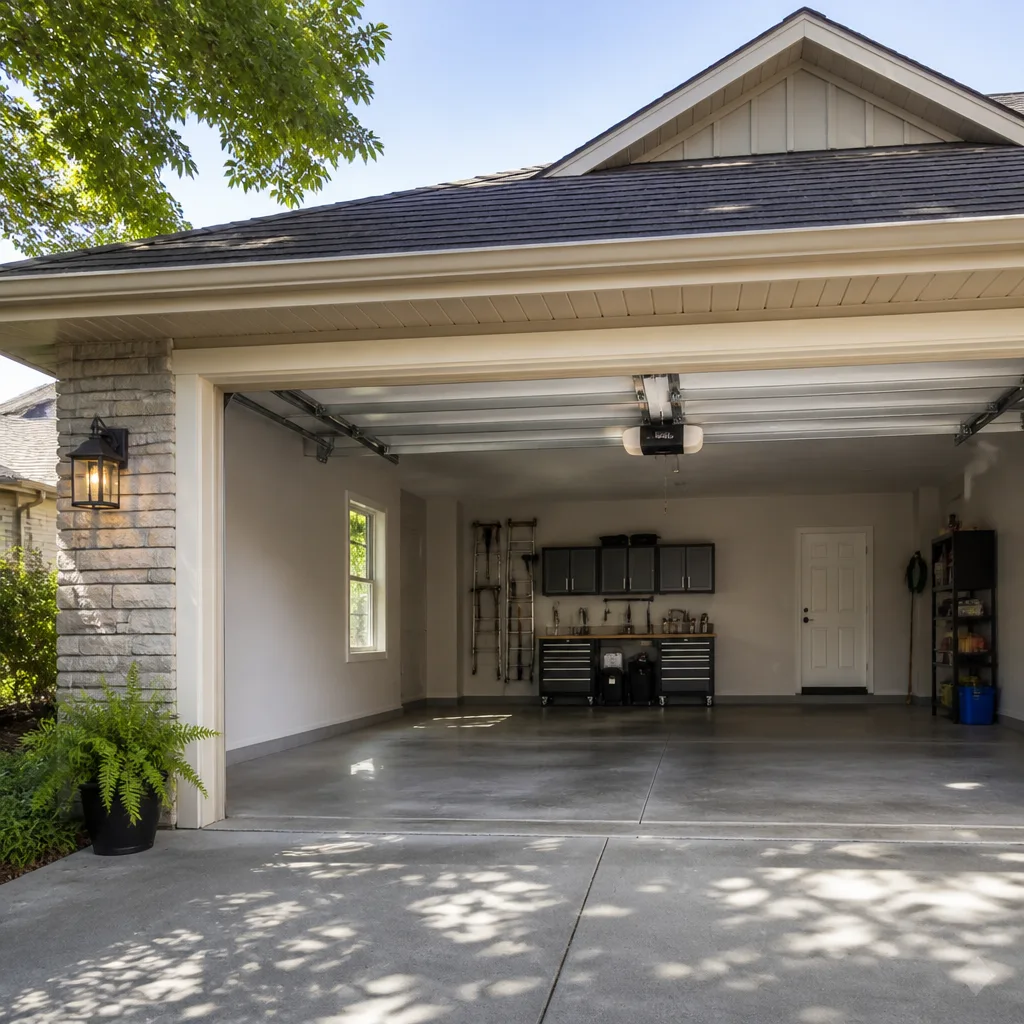 Chamberlain openers
Full 25-point door and opener safety check with every visit - springs, cables, rollers, tracks, and your LiftMaster or Chamberlain opener included
You get a price before we start. It does not change when the pro arrives.
Get your free estimateGarage Door Repair Maintenance Checklist for Hialeah Homeowners
Most garage door advice you’ll find online was written for a country with four seasons. It assumes a long winter rest and a springtime wake-up call. Hialeah doesn’t work that way. Your door cycles open and closed every month of the year, and the same humidity that fogs your windows works on steel, springs, and rollers while the door sits closed. A torsion spring rated for 10,000 cycles in a dry climate can quit well before that here because moisture drives corrosion, and corrosion eats into the wire that holds the whole door up. This guide is a maintenance system built for Hialeah homes, not a generic list of tasks. You’ll learn what to inspect and when, why your lubricant choice matters more in South Florida than anywhere else, how to prep the door before hurricane season, and how to read the early-warning signs that say a spring is close to failing.
Quick Answer
A solid garage door maintenance checklist for Hialeah homes covers four things on a repeating schedule: a monthly visual and balance check, lubrication every few months with a silicone-based or lithium grease product, an annual full inspection of springs, cables, rollers, and hardware, and a pre-hurricane-season check of bracing, seals, and the manual release. Because Hialeah doors cycle year-round and sit in humid air, components wear faster than in cooler climates, so the intervals here are tighter than what a national checklist tells you.
Styles & brands we work with
- Raised-panel steel
- Carriage house
- Modern flush
- Full-view glass
- LiftMaster openers
- Chamberlain openers
Table of Contents
- Why Hialeah Doors Wear Faster Than the Manual Says
- The Monthly Walk-Around: What to Look At and Listen For
- Corrosion Inspection: Springs, Rollers, and Cable Drums
- How to Test Balance and Spring Tension Without Tools
- Lubricant Selection: Why Standard WD-40 Is the Wrong Call Here
- Pre-Hurricane Season Checklist for Your Garage Door
- Maintenance Intervals That Fit Hialeah’s Year-Round Use
- Brand-Specific Notes Without the Guesswork
Why Hialeah Doors Wear Faster Than the Manual Says
Garage door manufacturers rate springs in cycles, not years. One cycle is one open and one close. A spring sold as a 10,000-cycle spring is telling you it should survive 10,000 of those trips before it’s expected to fail. What the rating can’t account for is the environment the spring lives in. In Hialeah, that environment is warm and humid nearly every day of the year, and humidity is the quiet accelerator. Moisture in the air works its way into the gaps where oiled steel meets air, and over months it turns a smooth spring into a pitted one. Pitting is a stress point, and stress points are where springs break.
Compare that to a northern market. A garage door in a cold climate might sit for stretches when homeowners park outside and leave the car in the driveway. Doors here get used constantly. Kids come and go, cars pull in and out, and the door never really gets a rest because there’s no winter shutdown. More cycles means faster wear, and faster wear means the maintenance schedule that made sense in a four-season climate leaves you behind.
That’s the case for treating maintenance in Hialeah as a system rather than a checklist you get to when you remember. There are a few local factors worth naming:
- Year-round cycling. No cold season means no slow season. Components that would last a decade up north can reach end of life sooner here simply because they’re used more.
- Humidity and moisture. Warm, humid air encourages corrosion on springs, cables, hinges, and the bottom brackets that anchor everything.
- Heat on the door panels. A garage that faces the afternoon sun traps heat, and repeated expansion and contraction works on seals and weatherstripping.
- Storm season. South Florida’s hurricane window is a real deadline every year, and a door that isn’t braced and sealed properly is a weak point when wind-driven rain and gusts arrive.
If your door is already showing symptoms like a shudder, a scrape, or a slow lift, that’s a sign to look at garage door repair before a small fix grows into a big one.
The Monthly Walk-Around: What to Look At and Listen For
You don’t need tools to catch most problems early. A five-minute walk-around once a month will surface the issues that matter, and doing it on a regular rhythm means you notice change over time instead of one day finding the door stuck. Here’s the routine, in order:
- Open and close the door and listen. A healthy door makes a low, steady hum from the opener and a soft roll from the tracks. Grinding, squealing, popping, or a door that jerks mean something is off, and where the noise comes from tells you what to check.
- Watch the travel. The door should move smoothly from bottom to top and back with no wobble. If one side lifts before the other, that’s a balance or track issue, not a nuisance.
- Look at the tracks. Run your hand along the inside edge of each vertical track (door down). You’re feeling for dents, bends, or debris. Don’t force anything back into shape; bent track interferes with the rollers and can drop the door off its line.
- Check the rollers. Each roller sits on a stem. Look for cracked nylon, a wobbly stem, or a roller that’s flat on one side. Steel rollers that have gone rough will grind.
- Look at the springs. Open the door first, then look above it at the springs. The torsion spring sits on a shaft across the top; extension springs run alongside the tracks. Look for visible gaps in the coil, a sagging spring, or rust that has flaked. Don’t touch, and never try to wind or unwind them yourself.
- Test the reverse. With the door open, place a roll of paper towels under it and close it via the opener. The door should reverse on contact. If it doesn’t, stop using the opener and get the safety system checked.
- Snap a photo each month. Point your phone at the springs and the bottom seals. Comparing photos month to month makes rust and sag visible before they become obvious.
That’s the whole routine. It takes about five minutes and gives you the same early warning that a technician looks for on a service call. For homeowners in Hialeah who want a professional baseline once a year, our team can run the deeper inspection in one visit and tell you exactly what condition the door is in.
Corrosion Inspection: Springs, Rollers, and Cable Drums
Corrosion is the slow killer of garage door hardware in Hialeah, and it doesn’t announce itself. It shows up as a dull sheen on a spring, a chalky film on a hinge, or a roller that suddenly won’t spin. The reason it matters is that the door’s springs are what hold its weight up, and a spring that has lost metal to rust has lost strength along with it. The same is true of the cables and the drums they wind onto.
Here’s what to look at, and what to look for:
- Torsion springs. Look for rust that has begun to flake rather than just tint. A light brown coating can be wiped and oiled; loose scale means the wire underneath is losing material. Flaking rust on a torsion spring is a call-us-now sign.
- Extension springs. These often have a safety cable threaded through them. Check both the spring and the cable. Rust on the cable, a frayed end, or a loose anchor plate is a hazard, not a maintenance note.
- Rollers and stems. Nylon rollers resist rust better than steel. Steel rollers that have gone gray and stiff are past due. A roller that won’t spin will flat-spot and then damage the track.
- Cable drums. The drums at the ends of the torsion shaft should be clean and free of corrosion where the cable winds. A cable that has jumped the drum or started to fray needs a professional look.
- Hinges and bottom brackets. These are the smaller parts and the ones most neglected. Rusted hinges squeak and seize; a bottom bracket takes the full weight of the door at the close. Neither should be loose.
One rule: never clean a spring or cable with a wire brush or a solvent that strips oil. You’ll remove rust and the protective film at the same time. Wipe with a dry cloth and, if it’s surface rust, treat it with a light lubricant. If you see the spring breaking down, that’s spring repair territory, and it’s the one job on this list that belongs to garage door spring repair and a trained technician every time. Springs are under extreme tension, and a mistake there can cause serious injury. No checklist is worth reaching over the shaft to check.
How to Test Balance and Spring Tension Without Tools
You can learn a lot about your springs with nothing but your hands, and the result tells you roughly how much spring life is left. The test is simple and safe, and you do it with the opener disconnected. Here’s the sequence:
- Disconnect the opener. Pull the red manual release cord so the door moves on its own, then close the door and open it partway. Leave it about halfway up.
- Let it rest. With the door at roughly half height, take your hands away. A door with healthy springs holds its position. A door that sinks to the ground has springs that have lost tension. A door that rises on its own is over-tensioned or has a problem with the counterweight.
- Lift it partway by hand. With the door down, slide your fingers under the bottom edge (never your whole hand) and lift it about a foot. A balanced door feels light and steady. If it feels like lifting a stuck window, the springs are weak.
- Check side to side. Raise the door on one side and let go. A badly out-of-balance door is heavier on one side, which usually points to one of the two torsion springs being tired.
- Reconnect the opener by running it until the carriage re-engages, then test the door again.
What the results mean: if the door sinks or feels heavy, the springs have lost tension and are heading toward failure. If it rises on its own, don’t leave it that way; a door that won’t stay down is a safety problem. The test doesn’t tell you exactly how many cycles are left, and no test can. What it does tell you is whether your springs are working as a balanced pair or have quietly fallen out of balance. If the door fails this test, stop operating it and call a professional. For homeowners in Hialeah who want a pro assessment, this is the check we run first on any service call.
Lubricant Selection: Why Standard WD-40 Is the Wrong Call Here
The blue-and-yellow can in your garage is probably the wrong tool for this job. Standard WD-40 is a penetrating oil and a solvent, not a long-term lubricant. It’s good at loosening stuck parts and displacing water on contact, but it evaporates and leaves a thin residue that dries out. On a garage door, where you need a film that stays put through heat, humidity, and hundreds of cycles, it won’t hold up. Worse, in a humid climate a solvent can strip off the light film of manufacturer grease that was protecting a part in the first place.
What to use instead, and where:
- Torsion and extension springs: a silicone-based lubricant or a light lithium grease. Apply a thin coat down the length of the spring with the door open. Spring work still belongs to a professional, but a light surface coat on a healthy spring helps slow corrosion.
- Hinges and pivot points: a lithium grease or silicone spray at each hinge knuckle. One short spray per hinge, then work the door a few times to distribute it.
- Rollers and stems: silicone spray on the stems only, not the track surface. Grease on the track collects dust and grit and turns into a grinding paste.
- Tracks: no lubricant at all. Keep them clean and dry, and wipe them down if they collect dust.
- Weatherstripping and seals: a silicone protectant keeps rubber from drying and cracking in the heat.
In South Florida, a light silicone spray on the hinges and springs every few months is the right rhythm. Skip the grease gun on the tracks, and skip the penetrating oil on anything you want a long-lasting film on. That’s the practical difference between a door that wears on schedule and one that wears faster than it should.
Pre-Hurricane Season Checklist for Your Garage Door
Storm season is the one deadline on the calendar that every Hialeah homeowner should build into their garage door routine. The garage door is the largest opening in the house, and a door that isn’t braced and sealed correctly is the weak point when wind-driven rain and gusts arrive. You don’t need to wait until a storm is forecast. Going through this list once before the season starts, and again if a storm is approaching, keeps the door as ready as it can be.
- Check the bracing. Look at how the vertical tracks are anchored to the wall and how the horizontal tracks are hung from the ceiling. Loose brackets, missing lag screws, or hardware that has pulled away from the framing all matter. Don’t add to or modify the bracing yourself; call out a professional to have it tightened or corrected.
- Test the manual release. Pull the red cord and confirm the door disconnects and moves freely on its own. Reconnect it. If it won’t detach or won’t move by hand, fix that before the season, not during it.
- Confirm the door seals. Check the bottom weatherstripping and the side and top seals. A gap at the bottom lets wind-driven rain in. Worn weatherstripping is cheap to replace and does real work.
- Look at the panels and windows. If your door has windows, confirm the glazing isn’t loose or cracked. A cracked pane is a stress point in high wind.
- Check for play in the door. Open the door partway and push gently on a panel. A door that flexes a lot or rattles in its tracks is telling you its hardware is loose.
- Know how to secure the door if power fails. That means knowing where the manual release is and how to operate it, since an opener that loses power leaves the door closed on its own.
If your door is older, or you’re not sure it was ever braced for wind, our garage door repair team can look at it and tell you what it needs. It’s a far better conversation to have in the calm weeks than in the middle of a storm warning.
Maintenance Intervals That Fit Hialeah’s Year-Round Use
National garage door checklists assume a cycle pattern that doesn’t match Hialeah. Here, doors are used every month, so components reach their service interval sooner in calendar terms than in a cooler climate. The table below gives you a schedule built around year-round use and humid air.
- Monthly – walk-around: listen, watch the travel, test reverse, look at the tracks and rollers, photo the springs.
- Every 3-4 months – lubricate hinges, pivot points, roller stems, and the visible length of springs; wipe the tracks clean and dry.
- Twice a year – run the balance test with the opener disconnected; check the seals and weatherstripping; check the battery in your remote and wall keypad.
- Annually – a full professional inspection of springs, cables, drums, brackets, and opener; confirm the safety reverse and the door’s balance; look at the bracing and the manual release before storm season.
- Before hurricane season – the pre-season checklist, plus a look at bracing and seals.
- Any time – if you hear a new noise, see a broken spring, or the door stops halfway, call for garage door repair rather than waiting for the next scheduled visit.
Compare this to a northern schedule. A homeowner up north might have the door sitting unused for weeks in the cold months, so the cycles accumulate slowly. Here they pile up every day. If your door is used several times a day by a family with multiple cars, treat those intervals as the shorter end, not the longer. And if you’re not sure where your door stands, our technicians have up to 10 years of experience and can put together a schedule that fits how your household actually uses the door.
Brand-Specific Notes Without the Guesswork
Every garage door system has its own quirks, and knowing the manufacturer cuts down on wasted time. We work on the major residential brands, including Clopay, Amarr, Wayne Dalton, and Craftsman, and the opener platforms most homes run on. That matters because the right fix depends on the system in front of us, not on a one-size part number.
- Clopay doors are common on residential installations. Their panel and hardware systems vary by model, so the maintenance points shift with the build. A technician who knows the line skips the guesswork.
- Amarr doors are also widespread, and their section construction and hardware spacing affect how the balance test reads.
- Wayne Dalton systems show up across the range from standard sectional doors to the TorqueMaster-style spring setups, and those have their own service approach.
- Craftsman openers are among the most common legacy units, and their mechanical and safety-reverse systems respond well to a proper tune-up. If yours is acting up, our garage door opener repair team can diagnose the opener and the door together.
The point of naming brands isn’t to sell one. It’s that a repair-first shop should be able to diagnose your Clopay, Amarr, or Wayne Dalton door without phoning a friend, and fix the opener on a Craftsman unit without trying to talk you into a new system you don’t need. That’s the approach we take: the right fix, not the easiest upsell.
Common Mistakes to Avoid
- Using WD-40 as your regular lubricant. It’s a solvent that dries out. In Hialeah’s humidity it leaves parts exposed, and that accelerates the rust you’re trying to slow.
- Greasing the tracks. Grease on the track collects grit and turns into grinding paste. Tracks should be clean and dry.
- Trying to adjust or replace springs yourself. These are under extreme tension. A slip can cause serious injury, which is why spring work belongs to a trained technician every time.
- Ignoring the balance test. A door that sinks on the half-up test is telling you its springs are wearing. Ignoring it means the failure happens when you’re least ready for it.
- Skipping the pre-storm check. Loose bracing and worn seals are the things you can fix in the calm weeks, but far harder to deal with once a storm warning is up.
- Forcing a door that’s stuck. If the door won’t move smoothly, pulling harder on the handle or the opener strains the springs and cables and can turn a small repair into a much larger one.
- Assuming a national checklist fits Hialeah. The intervals written for a four-season climate assume a winter rest. Here the door cycles all year, so you need to stay ahead of it.
See the difference
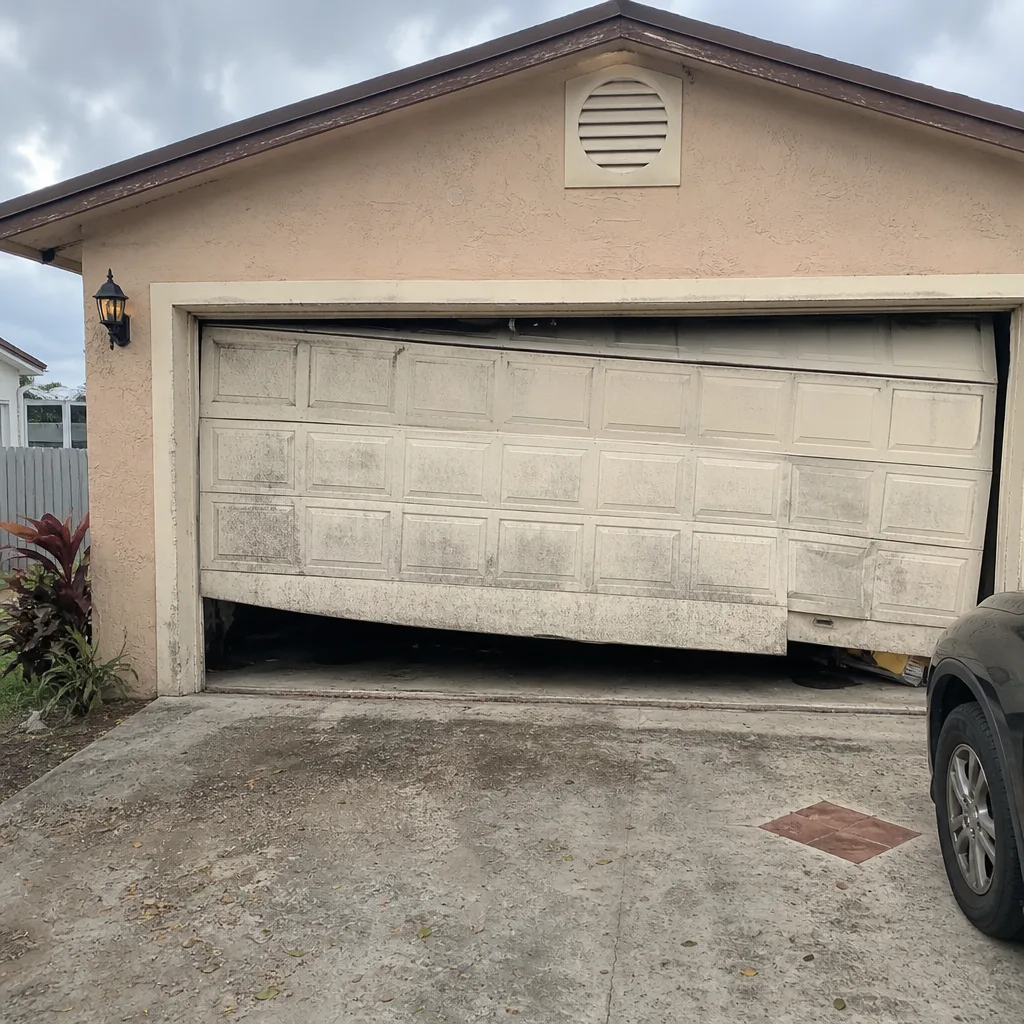 Before
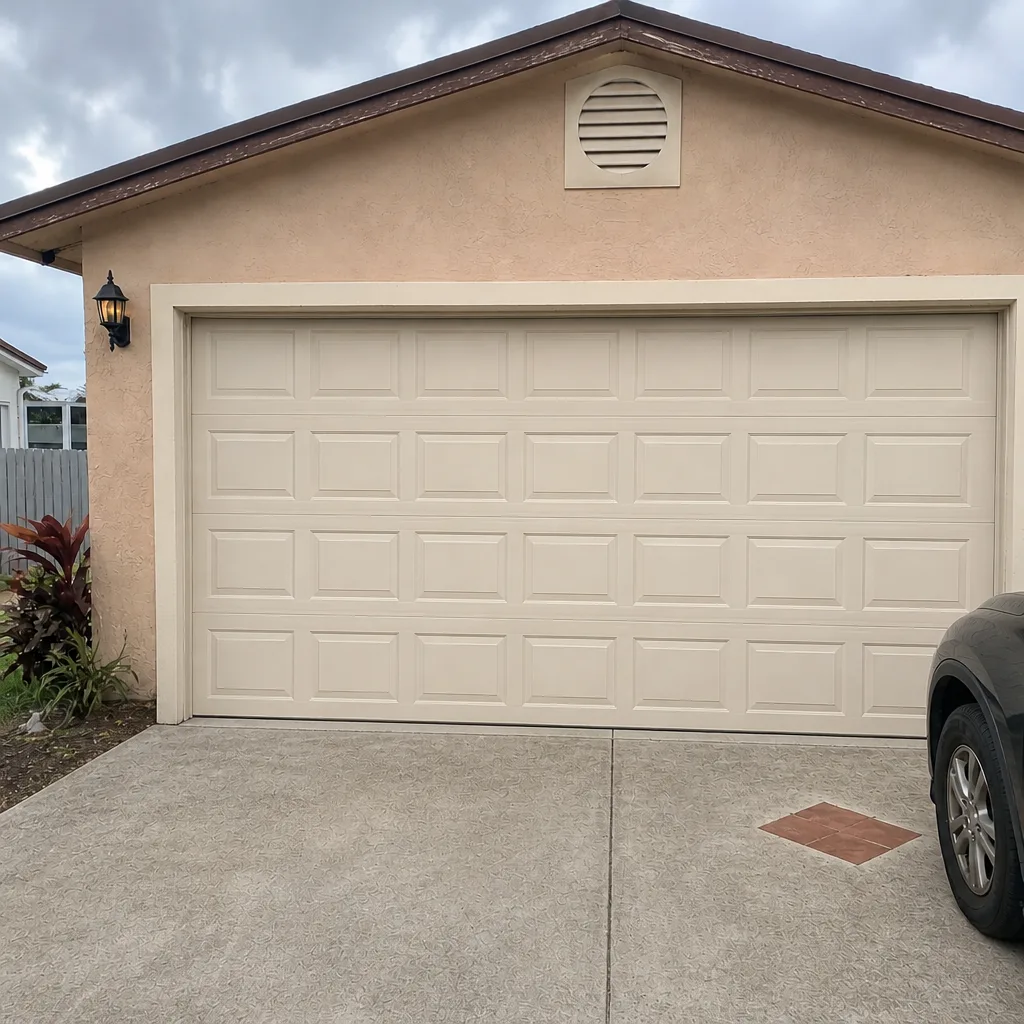 After
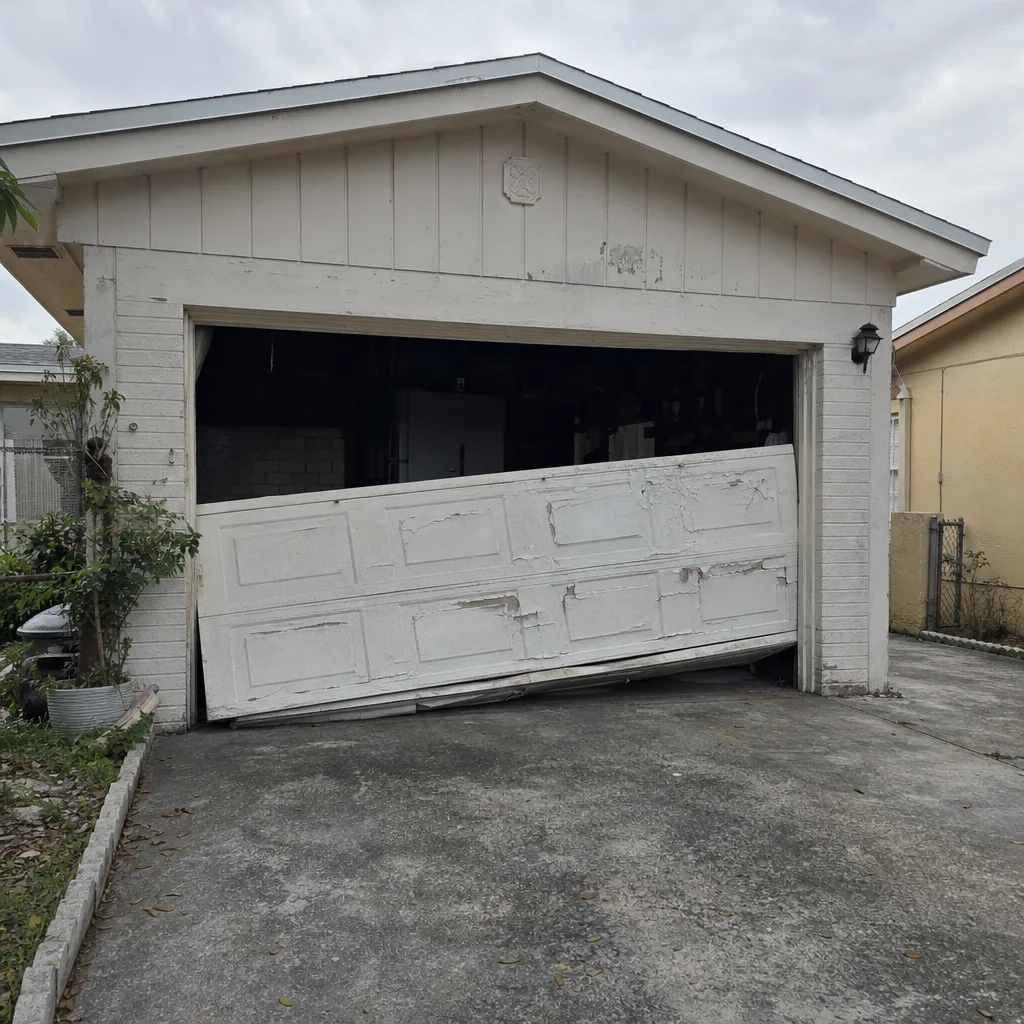 Before
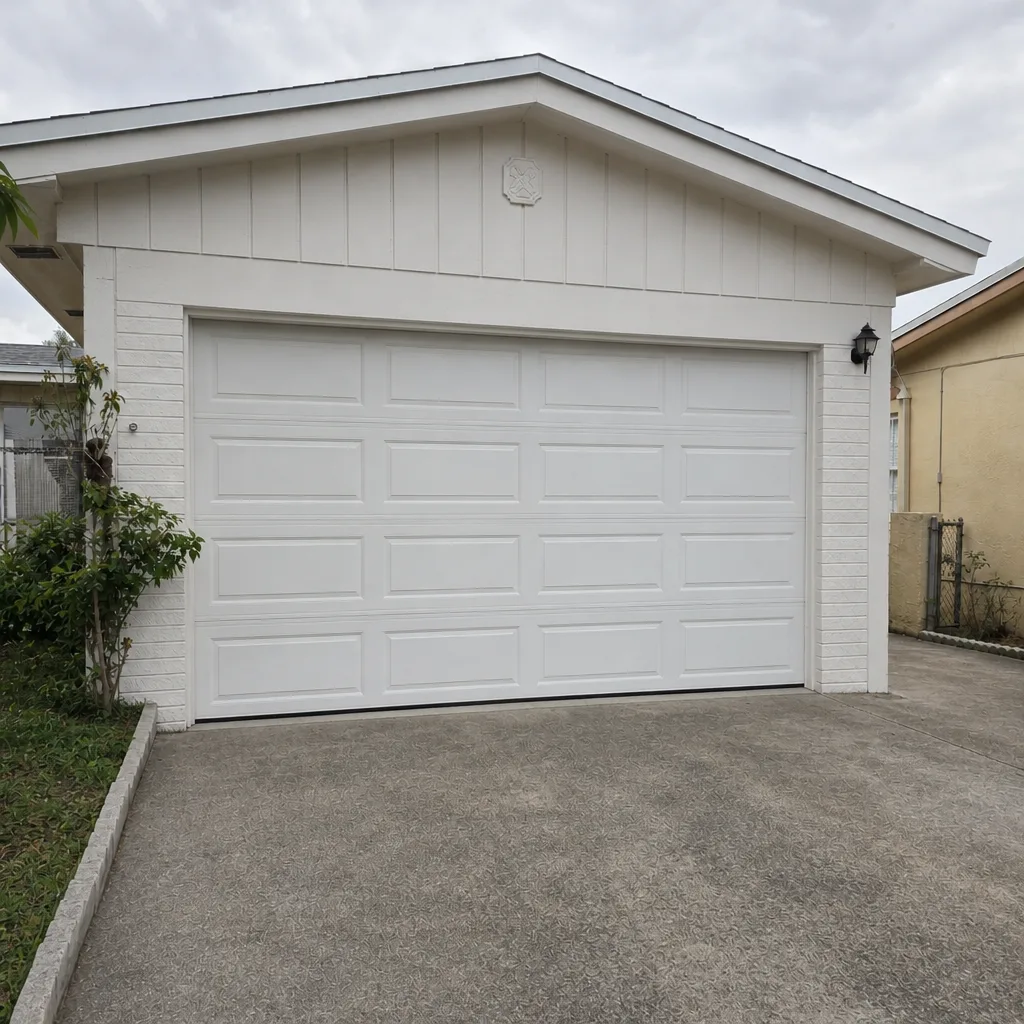 After
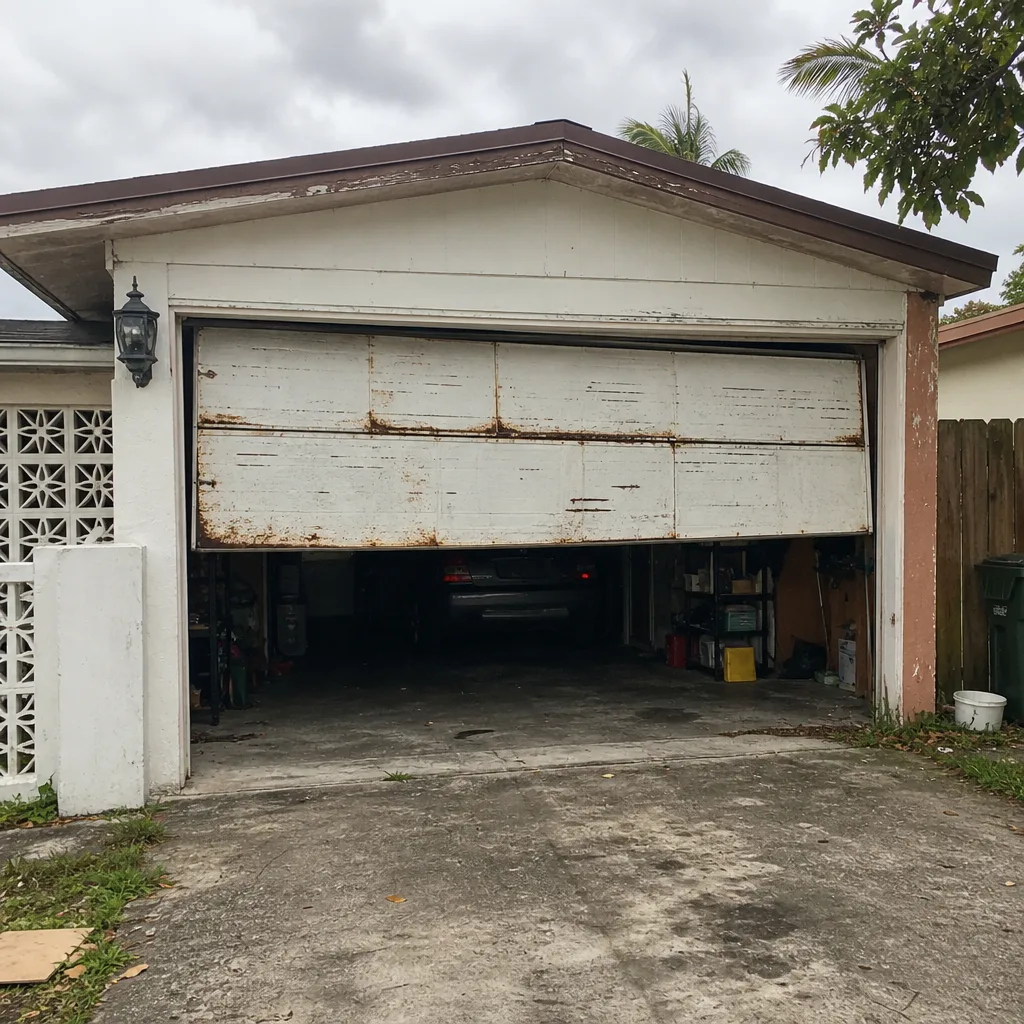 Before
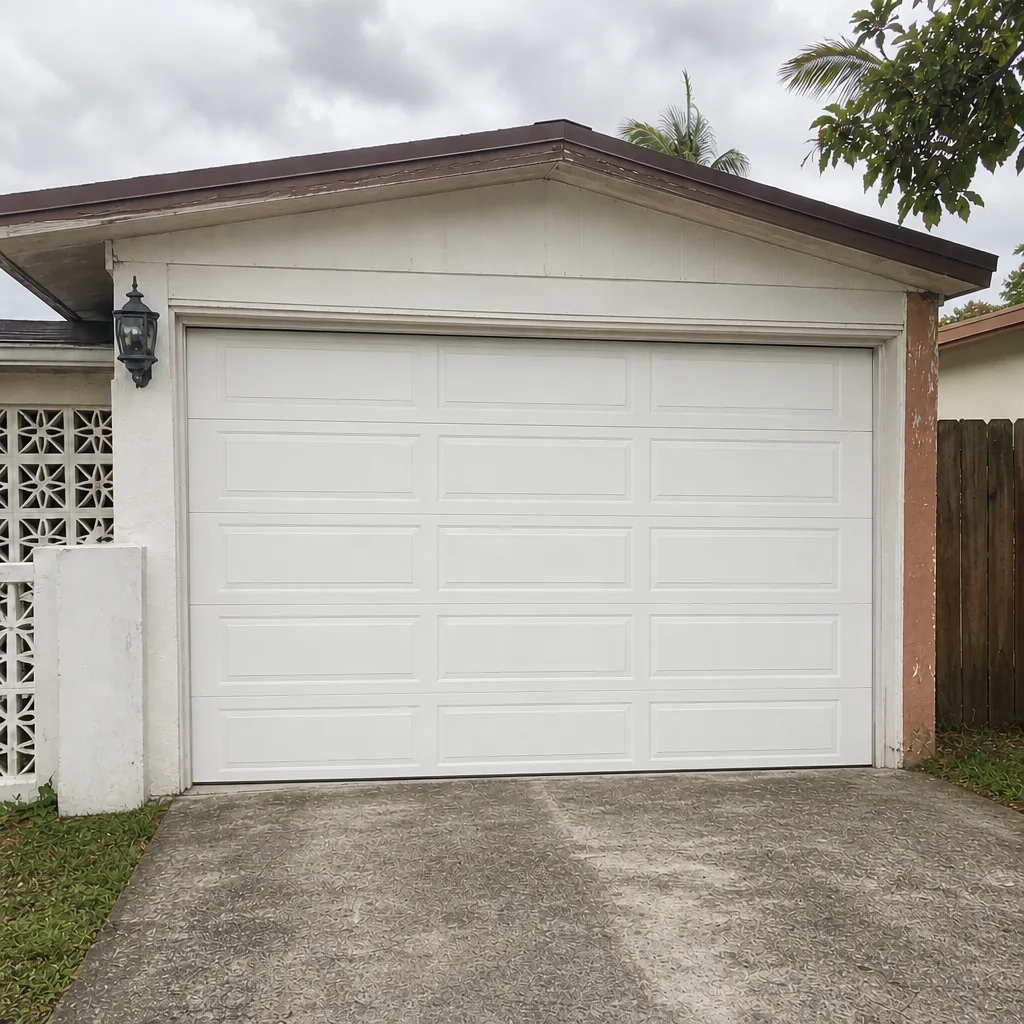 After
When to Call a Professional
Most of this checklist is something you can do yourself, and it’s worth doing. The line is drawn at the parts that can hurt you. Call a professional if you see a visible gap in a spring, a sagging spring, flaking rust on a torsion spring, or a frayed cable. Call if the door fails the balance test, if one side lifts before the other, if the door reverses poorly or not at all, or if the opener runs but the door doesn’t move. And call if the door won’t seal against wind-driven rain or the bracing looks loose before storm season.
Hialeah Garage Door Repair Pros offers free estimates in Hialeah. Our technicians work on the major door and opener brands, spring repair is a core specialty rather than an upsell, and the price is quoted and agreed before any work starts. You’ll never get an invoice that’s bigger than the quote. Call (877) 492-2079. If the door is stuck open or a vehicle is trapped inside, we can take an urgent call and get you from stuck to secure.
Frequently Asked Questions
Once a year for a full professional inspection, with lubrication every three to four months and a monthly five-minute walk-around. Hialeah doors cycle all year with no winter rest, so the same components reach their service interval sooner than they would in a cooler climate. If your household uses the door several times a day, stay on the shorter end of those intervals.
Because springs are rated in cycles and this climate adds corrosion to the wear. Year-round use piles up cycles faster, and humid air works on the steel while the door sits closed. A spring that might last a decade in a dry climate can wear out sooner here. If you see flaking rust or a sagging spring, call (877) 492-2079 for an estimate.
You can apply a light coat of silicone or lithium grease to the visible length of a healthy spring with the door open, but you should never adjust, wind, or unwind them. Springs are under extreme tension and a mistake there can cause serious injury. Leave any actual spring repair to a trained technician.
Check the bracing and hardware, test the manual release, confirm the bottom and side seals, inspect the panels and glazing, and look for play in the door. If anything is loose or worn, have it fixed in the calm weeks rather than during a storm warning. A door that isn’t braced and sealed is the weak point when wind-driven rain arrives.
A silicone-based lubricant or light lithium grease on hinges, pivot points, roller stems, and the visible length of springs. Standard WD-40 is a solvent, not a long-lasting lubricant, and it dries out in humidity. Keep the tracks clean and dry, and skip grease there because it collects grit.
For most repairs, yes. Broken springs, failed openers, doors off track, and doors stuck open or closed are the calls we handle fastest, and emergency service is available for urgent situations like a door stuck open or a vehicle trapped inside. Call (877) 492-2079 for an exact quote. Estimates are free, and the price is agreed before any work starts.
The Bottom Line
Garage door maintenance in Hialeah isn’t a once-a-year task. It’s a system: a monthly walk-around, lubrication every few months, an annual professional inspection, and a pre-hurricane-season check on bracing, seals, and the manual release. The humid air and year-round cycling that make this climate comfortable also accelerate wear on springs, rollers, and cables, and that’s the part a national checklist misses. Do the small checks yourself, leave spring work and bracing to a technician, and catch the early signs before they become an emergency. That’s the difference between a door that lasts and one that quits at the worst time.
When you’re ready to get ahead of it, Hialeah Garage Door Repair Pros is here to help. Our technicians have up to 10 years of experience, we work on the major door and opener brands, and we’ll quote the price and agree on it with you before any work starts. Call (877) 492-2079 for a free estimate.
Written by the team at Hialeah Garage Door Repair Pros.